
Introduction
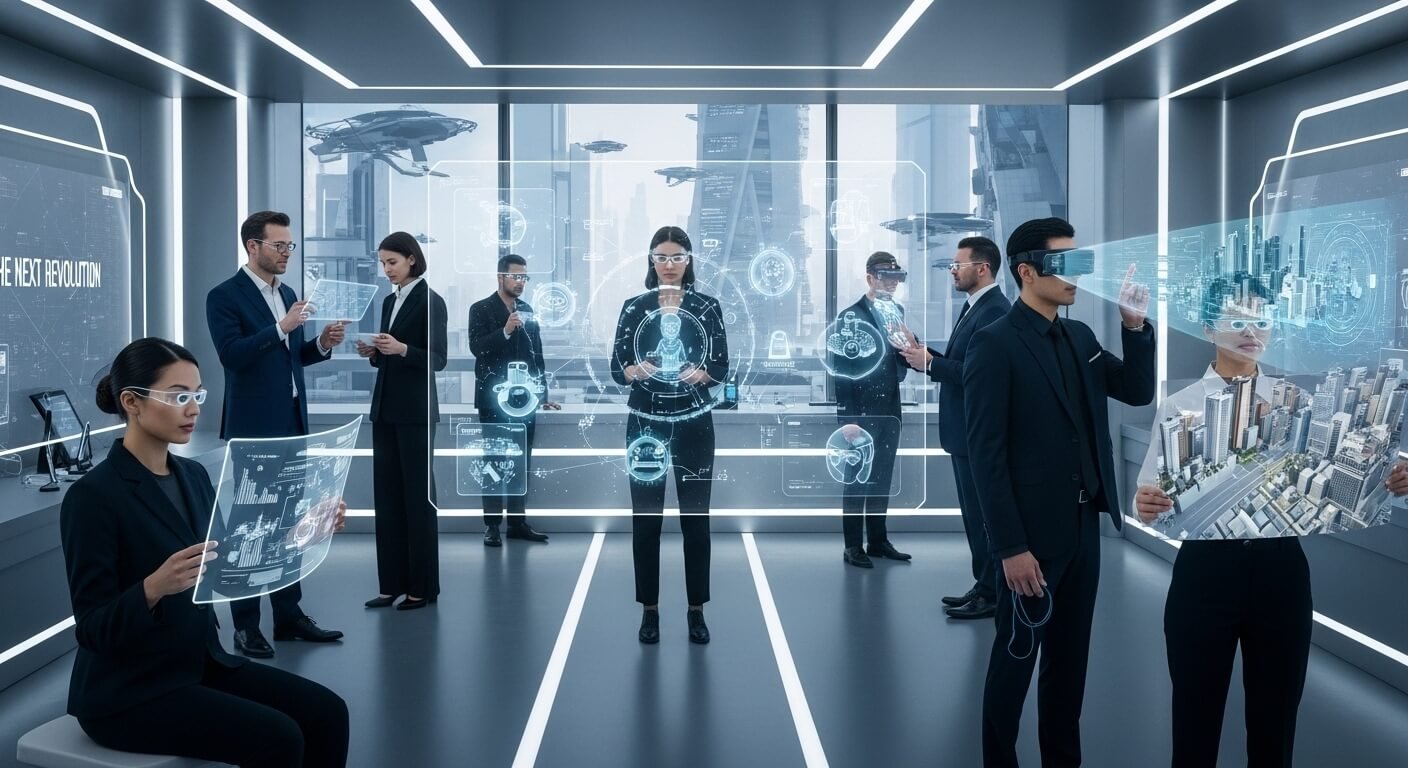
Smartphones have transformed modern life. People depend on them for communication, work, learning, entertainment, and even health tracking. However, innovation in smartphones has slowed down in recent years. New models mostly offer minor improvements instead of revolutionary changes. Many users also experience screen fatigue, privacy concerns, and digital overload. To solve these challenges, technology companies are now designing smarter systems that reduce dependence on handheld devices. Today, tech giants envision future beyond smartphones by creating technologies that integrate naturally into daily life through artificial intelligence, wearable computing, and immersive digital environments.
Understanding the Shift Toward Post-Smartphone Technology
Technology evolves whenever user behavior changes. Desktop computers were replaced by laptops, and laptops were later complemented by smartphones. Now, experts believe another transformation is beginning.
The concept of post-smartphone technology focuses on making computing invisible and more human-centered. Instead of opening apps repeatedly, users may interact with technology through voice, gestures, or intelligent automation.
This shift does not mean smartphones will disappear immediately. Instead, they may become secondary devices while newer technologies take the primary role.
Why Smartphones Are Reaching Their Limits
1. Innovation Plateau
Most smartphones today share similar designs and features. Improvements are often limited to camera upgrades or faster processors.
2. Screen Dependency
People spend several hours daily looking at screens, which affects focus, sleep patterns, and productivity.
3. Limited Interaction Experience
Touchscreens cannot fully match natural human communication methods like speech or vision-based interaction.
4. Growing Need for AI Integration
Advanced AI systems require continuous interaction and environmental awareness, something smartphones alone struggle to provide efficiently.
Because of these reasons, tech giants envision future beyond smartphones where technology adapts to humans instead of humans adapting to devices.
Key Technologies Driving the Future Beyond Smartphones
Artificial Intelligence as the Core Interface
Artificial intelligence is becoming the center of next-generation computing. AI assistants are evolving from simple voice tools into intelligent digital companions.
Future AI systems may:
- Predict user needs
- Automate daily tasks
- Provide contextual information instantly
- Act as personal productivity managers
AI removes the need to manually navigate multiple apps, supporting a seamless digital experience.
Wearable Devices and Smart Glasses
Wearables represent one of the strongest steps toward next generation technology devices. Smartwatches already track health and notifications, but future devices may go much further.
Expected developments include:
- Lightweight smart glasses replacing phone screens
- Real-time language translation
- Continuous health monitoring
- Gesture-based control systems
These innovations show how tech giants envision future beyond smartphones by moving computing closer to the human body.
Augmented Reality and Mixed Reality Experiences
Augmented reality (AR) blends digital information with the physical world. Instead of checking a phone for directions, navigation could appear directly in front of a user’s eyes.
Applications of AR include:
- Interactive education
- Remote teamwork in virtual offices
- Training simulations
- Enhanced shopping experiences
AR technology supports the idea that future devices will enhance reality rather than distract from it.
Ambient Computing and Smart Environments
Ambient computing means technology operates quietly in the background. Devices communicate with each other automatically without constant user input.
Examples:
- Smart homes adjusting lighting automatically
- Cars responding to voice commands
- Offices optimizing work environments using AI
In such systems, computing exists everywhere, not inside one device. This approach reflects how tech giants envision future beyond smartphones through connected ecosystems.
The Role of Major Technology Companies
Leading technology companies are investing heavily in research and development to shape future digital experiences. Their focus areas include:
- AI-powered operating systems
- Spatial computing platforms
- Cloud-connected devices
- Human-centered design principles
These companies aim to create ecosystems where devices work together seamlessly rather than independently.
Their shared vision shows that innovation is moving toward smarter environments instead of smarter phones.
Benefits of Technology After Smartphones
More Natural Interaction
Voice and gesture controls reduce reliance on typing and tapping.
Increased Productivity
Automation allows users to focus on meaningful tasks instead of managing apps.
Improved Health Awareness
Wearables provide continuous monitoring and preventive healthcare insights.
Personalized Digital Experiences
AI systems learn user habits and adapt accordingly.
As a result, tech giants envision future beyond smartphones where technology feels less intrusive and more supportive.
Challenges and Concerns in the Post-Smartphone Era
Despite exciting possibilities, several challenges remain:
- Data privacy and security risks
- High costs of emerging devices
- Battery efficiency limitations
- Social acceptance of wearable technology
Addressing these concerns is essential for widespread adoption.
Impact on Work, Education, and Society
Work Transformation
Virtual collaboration tools may create immersive remote workplaces.
Education Evolution
Students could learn through interactive simulations instead of traditional screens.
Healthcare Advancement
Continuous monitoring may help detect diseases earlier.
These societal changes highlight why tech giants envision future beyond smartphones as a long-term technological transformation rather than a short-term trend.
How Consumers Can Prepare for the Next Technology Wave
Users can prepare by:
- Learning AI-based tools
- Exploring wearable technologies
- Understanding digital privacy
- Developing adaptability toward new interfaces
Early adoption helps individuals stay competitive in a rapidly evolving digital world.
The Road Ahead: What Comes Next?
Experts predict that the next decade will introduce devices that feel almost invisible. Technology will shift from something people carry to something they experience continuously.
Possible innovations include:
- AI companions integrated into daily routines
- Smart glasses replacing traditional displays
- Voice-first computing ecosystems
- Fully connected digital environments
This direction confirms that tech giants envision future beyond smartphones as a smarter, more integrated technological era.
Conclusion
The smartphone revolution changed how humanity connects and communicates, but technology continues to evolve. Artificial intelligence, wearable devices, augmented reality, and ambient computing are shaping a new digital landscape. Instead of relying on a single handheld device, future technology will exist all around us, responding intelligently to human needs. As innovation progresses, the vision where tech giants envision future beyond smartphones becomes increasingly realistic, promising a world where technology is more natural, personalized, and seamlessly integrated into everyday life.