
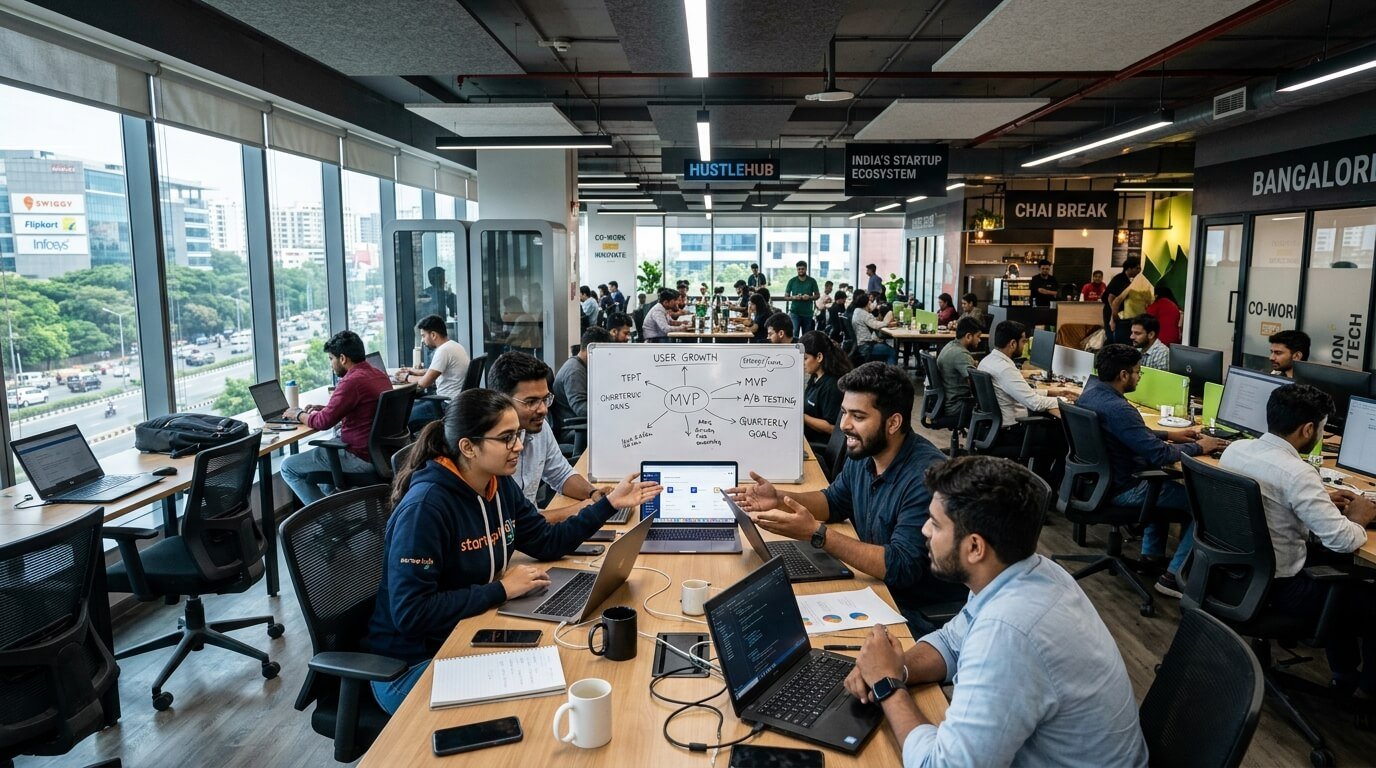
Starting and scaling a business in India has become increasingly competitive, especially for entrepreneurs searching for affordable workspaces, skilled talent, funding opportunities, and strong business ecosystems. Many startups fail to grow because they choose the wrong location with limited networking, poor infrastructure, or high operating costs. The solution lies in choosing the right Indian startup office hubs, where innovation, investment, technology, and entrepreneurial communities come together to support growth. In 2026, India’s startup ecosystem is stronger than ever, with several cities emerging as major innovation centers for tech companies, fintech startups, AI firms, SaaS businesses, and creative entrepreneurs.
What Are Indian Startup Office Hubs?
Indian startup office hubs are cities or business districts that offer startup-friendly environments with coworking spaces, tech parks, venture capital access, incubators, accelerators, and strong networking opportunities. These hubs attract entrepreneurs because they provide the resources needed to launch and scale successful businesses.
Startup office hubs usually include:
- Flexible coworking spaces
- Technology parks
- Startup incubators
- Venture capital firms
- Skilled workforce availability
- Business networking communities
- Affordable office infrastructure
- Government startup support programs
India’s startup landscape has expanded far beyond traditional metropolitan areas, with both Tier-1 and Tier-2 cities now contributing to innovation and entrepreneurship.
Why Indian Startup Office Hubs Are Growing Rapidly
India has become one of the world’s largest startup ecosystems. Digital transformation, internet accessibility, government initiatives, and increased venture capital investments have accelerated startup growth across the country.
Key Reasons Behind Startup Hub Growth
Strong Digital Economy
India’s digital economy continues to expand due to smartphone adoption, online payments, AI development, and cloud computing.
Government Startup Policies
Programs such as Startup India encourage innovation through tax benefits, easier business registration, and funding support.
Rise of Coworking Culture
Flexible workspaces reduce operational costs for startups while providing networking opportunities and modern infrastructure.
Global Investment Interest
International investors are increasingly funding Indian startups in fintech, SaaS, healthtech, edtech, and artificial intelligence.
Skilled Young Workforce
India has one of the largest populations of engineers, developers, designers, and entrepreneurs globally.
These factors have transformed multiple Indian cities into thriving startup office hubs.
Bengaluru: India’s Silicon Valley
Why Bengaluru Leads Among Indian Startup Office Hubs
Bengaluru remains the top startup destination in India due to its advanced tech ecosystem and global investment presence.
Key Industries in Bengaluru
- Artificial Intelligence
- SaaS startups
- Fintech
- Edtech
- Cybersecurity
- Cloud computing
Advantages of Bengaluru for Startups
- Access to skilled IT professionals
- Presence of global tech companies
- Strong venture capital ecosystem
- Modern coworking infrastructure
- Large startup networking communities
Popular startup areas include:
- Koramangala
- HSR Layout
- Whitefield
- Indiranagar
The city hosts thousands of startups and unicorn companies, making it the strongest innovation ecosystem in India.
Challenges in Bengaluru
- High office rental costs
- Traffic congestion
- Increasing competition for talent
Despite these issues, Bengaluru continues to dominate the Indian startup ecosystem in 2026.
Hyderabad: Fastest Growing Tech and Startup Hub
Hyderabad has emerged as one of the most attractive startup office destinations because of affordable infrastructure and strong government support.
Why Startups Prefer Hyderabad
Lower Operational Costs
Compared to Bengaluru and Mumbai, Hyderabad offers more affordable office spaces and living costs.
Strong IT Infrastructure
The city is home to major technology campuses and innovation parks.
Government Support
Telangana’s startup policies and innovation centers encourage entrepreneurship and investment.
Key Startup Areas
- HITEC City
- Gachibowli
- Madhapur
Hyderabad is especially strong in:
- Artificial intelligence
- Pharma tech
- SaaS
- Cloud services
- Healthtech startups
The city’s combination of affordability and infrastructure makes it highly attractive for new businesses.
Mumbai: Financial Capital and Startup Powerhouse
Mumbai continues to be one of the most influential Indian startup office hubs because of its financial ecosystem and investor presence.
Why Mumbai Attracts Startups
Access to Investors
Mumbai hosts many venture capital firms, angel investors, and financial institutions.
Strong Media and Marketing Industry
Creative startups, media companies, and digital agencies thrive in Mumbai.
Large Consumer Market
Businesses gain access to one of India’s largest urban consumer bases.
Popular Startup Sectors
- Fintech
- E-commerce
- Media tech
- Advertising technology
- Entertainment startups
Top Startup Locations
- Powai
- Lower Parel
- Bandra Kurla Complex (BKC)
- Andheri
Although office costs are high, Mumbai offers unmatched business exposure and networking opportunities.
Delhi NCR: Diverse Startup Ecosystem
Delhi NCR, including Gurgaon and Noida, has become one of the largest startup ecosystems in India.
Why Delhi NCR Is a Startup Magnet
Strong Corporate Presence
The region hosts multinational companies, IT firms, and consulting businesses.
Excellent Connectivity
Modern infrastructure and airport connectivity support business expansion.
Growing Coworking Spaces
Flexible office solutions make it easier for startups to operate affordably.
Startup-Friendly Cities in NCR
Gurgaon
Known for:
- SaaS startups
- Fintech companies
- Corporate offices
- Startup accelerators
Noida
Popular for:
- IT startups
- Digital marketing agencies
- Software companies
- E-commerce businesses
Delhi NCR is particularly strong in fintech, logistics, AI, and enterprise technology.
Pune: Affordable and Innovation-Driven
Pune is rapidly becoming one of the most promising startup office hubs for entrepreneurs seeking affordability and skilled talent.
Advantages of Starting Up in Pune
Educational Institutions
The city produces thousands of engineers and tech professionals annually.
Lower Office Costs
Compared to larger metros, Pune offers cost-effective commercial spaces.
Growing IT Sector
Pune’s IT parks and coworking spaces support startup growth.
Popular Startup Industries
- SaaS
- Automotive technology
- AI startups
- Software development
The city combines startup-friendly costs with a high-quality lifestyle.
Chennai: Emerging Hub for Deep Tech and SaaS
Chennai has quietly developed into a major innovation center for technology-driven startups.
Why Chennai Is Growing in 2026
Strong Manufacturing Ecosystem
Chennai supports hardware and automotive technology startups.
SaaS Growth
The city has become increasingly important for SaaS and enterprise software businesses.
Skilled Workforce
Engineering colleges provide consistent tech talent.
Affordable Infrastructure
Office costs remain lower than Bengaluru and Mumbai.
Chennai’s startup ecosystem continues expanding due to increasing investor attention and digital transformation.
Ahmedabad and Jaipur: Rising Tier-2 Startup Cities
Tier-2 cities are now playing a larger role in India’s startup economy.
Ahmedabad Startup Ecosystem
Ahmedabad offers:
- Lower business costs
- Growing startup incubators
- Strong manufacturing sector
- Expanding fintech ecosystem
Jaipur Startup Growth
Jaipur is becoming popular because of:
- Affordable coworking spaces
- Government startup programs
- Growing digital businesses
- Tourism and e-commerce startups
These cities are attracting entrepreneurs seeking affordable alternatives to larger metro hubs.
Role of Coworking Spaces in Indian Startup Office Hubs
Coworking spaces have become essential to startup growth.
Benefits of Coworking Offices
Lower Initial Investment
Startups avoid expensive long-term leases.
Flexible Workspace Options
Businesses can scale office space based on growth.
Networking Opportunities
Shared environments help founders connect with investors and professionals.
Modern Infrastructure
Coworking hubs offer:
- High-speed internet
- Conference rooms
- Event spaces
- Business lounges
Popular coworking providers in India include:
- WeWork
- Awfis
- 91Springboard
- Innov8
- Smartworks
These spaces play a major role in strengthening startup ecosystems.
Government Initiatives Supporting Startup Hubs
India’s government has introduced several initiatives that support innovation and entrepreneurship.
Important Startup Programs
Startup India
Provides:
- Tax benefits
- Easier company registration
- Funding support
- Incubation opportunities
Digital India
Encourages digital infrastructure and online business growth.
State-Level Innovation Policies
Many Indian states now offer startup grants, subsidies, and innovation centers.
Government support has significantly accelerated startup activity across Indian cities.
Challenges Faced by Indian Startup Office Hubs
Despite rapid growth, startups still face important challenges.
Major Startup Challenges
Rising Office Costs
Premium office spaces in metro cities remain expensive.
Talent Competition
Top startups compete aggressively for skilled professionals.
Infrastructure Pressure
Traffic congestion and urban crowding affect productivity in major cities.
Funding Competition
Securing investment remains difficult for early-stage startups.
However, the growth of Tier-2 cities is helping solve many of these issues by offering lower costs and less competition.
Future Trends in Indian Startup Office Hubs
The future of India’s startup ecosystem looks highly promising.
Key Trends Shaping 2026 and Beyond
Hybrid Work Models
Flexible work arrangements continue changing office requirements.
AI and Automation Growth
Artificial intelligence startups are receiving major investments.
Expansion of Tier-2 Cities
Smaller cities will attract more startups due to affordability.
Green and Sustainable Offices
Eco-friendly office spaces are becoming increasingly important.
Increased Global Investment
International venture capital firms continue entering the Indian market.
India’s startup economy is expected to become even more decentralized and innovation-driven in the coming years.
How to Choose the Right Indian Startup Office Hub
Selecting the right city depends on your business goals and industry.
Factors to Consider
Budget
Evaluate office rent, salaries, and operational expenses.
Talent Availability
Choose cities with strong professional ecosystems for your industry.
Investor Access
Some hubs offer better funding opportunities.
Industry Focus
Different cities specialize in different startup sectors.
Lifestyle and Infrastructure
Employee quality of life also impacts long-term growth.
Choosing the right startup office hub can significantly influence business success.
Conclusion
Indian startup office hubs are transforming the country into one of the world’s most exciting innovation ecosystems. Cities like Bengaluru, Hyderabad, Mumbai, Delhi NCR, Pune, and Chennai continue attracting entrepreneurs because of their strong infrastructure, investor networks, skilled talent, and startup-friendly environments. At the same time, Tier-2 cities such as Ahmedabad and Jaipur are creating new opportunities with lower costs and growing business support systems.
As India moves further into the digital economy, startup office hubs will play an even larger role in driving entrepreneurship, job creation, and technological innovation. Businesses that choose the right startup ecosystem can gain access to resources, funding, networking, and talent that support long-term growth and global competitiveness in 2026 and beyond.
For reservations and additional information, visit : silicon-insider.com.in