
Introduction
Many companies struggle with one big problem: they have lots of sustainability‑data scattered across departments, it’s hard to manage governance and compliance, and they’re under increasing pressure to deliver transparent reports. The solution: adopting the right esg platforms that bring together data, streamline workflows, and enable reliable reporting and insights. This article explores why these platforms matter, what features to look for, how to choose them, and which tools are rising stars in 2025 — so you can make smarter decisions around sustainability data management and corporate sustainability reporting.
Why ESG Platforms Matter for Business Growth
In today’s environment, stakeholders expect more than basic disclosures. Companies need to track environmental impact, social responsibility and governance practices, and present them clearly. That means good sustainability data management is no longer optional. Traditional spreadsheets and manual processes lead to errors, inefficiencies and weak visibility.
Modern esg platforms step in to provide a unified system for collecting, consolidating and analysing data from across the business. According to one overview, these platforms “collect diverse data sets related to environmental impact, social responsibility, and corporate governance … provide insights into key performance indicators and trends”.
In addition, businesses increasingly need ESG reporting software that can handle regulatory frameworks, audit trails and cross‑department workflows. When used well, the right platform doesn’t just help you tick a compliance box — it gives you strategic value: improved decision‑making, better stakeholder trust, and stronger resilience.
Key Features to Look For in ESG Platforms
When you evaluate esg platforms, here are the core capabilities you should focus on:
- Framework & compliance support
The tool should support major standards (GRI, SASB, ISSB, CSRD) so your reporting aligns with external requirements. - Data integration & centralisation
It must connect with finance systems, HR, supply‑chain, operations – so you don’t keep recreating data manually. One guide lists “ESG reporting software” platforms that integrate data across systems. - Audit‑readiness & traceability
You’ll need workflows, version control, audit logs and clear governance built into the tool. One review emphasises that good platforms are “audit‑ready” and can support value‑chain data. - Analytics, benchmarking & insight generation
It’s not enough to collect data — you also need to analyse it, benchmark vs peers, set targets and monitor progress. One list names tools that provide dashboards, carbon analytics and reporting alignment. - Scalability & future‑proofing
Sustainability reporting and regulatory demands will grow. Choose a tool that scales, handles more metrics (e.g., Scope 3 emissions) and evolves with you. A buyer’s guide stresses this aspect.
By assessing platforms against these dimensions, you ensure the investment is strategic, not just a quick fix.
Top Tools & Platforms to Consider in 2025
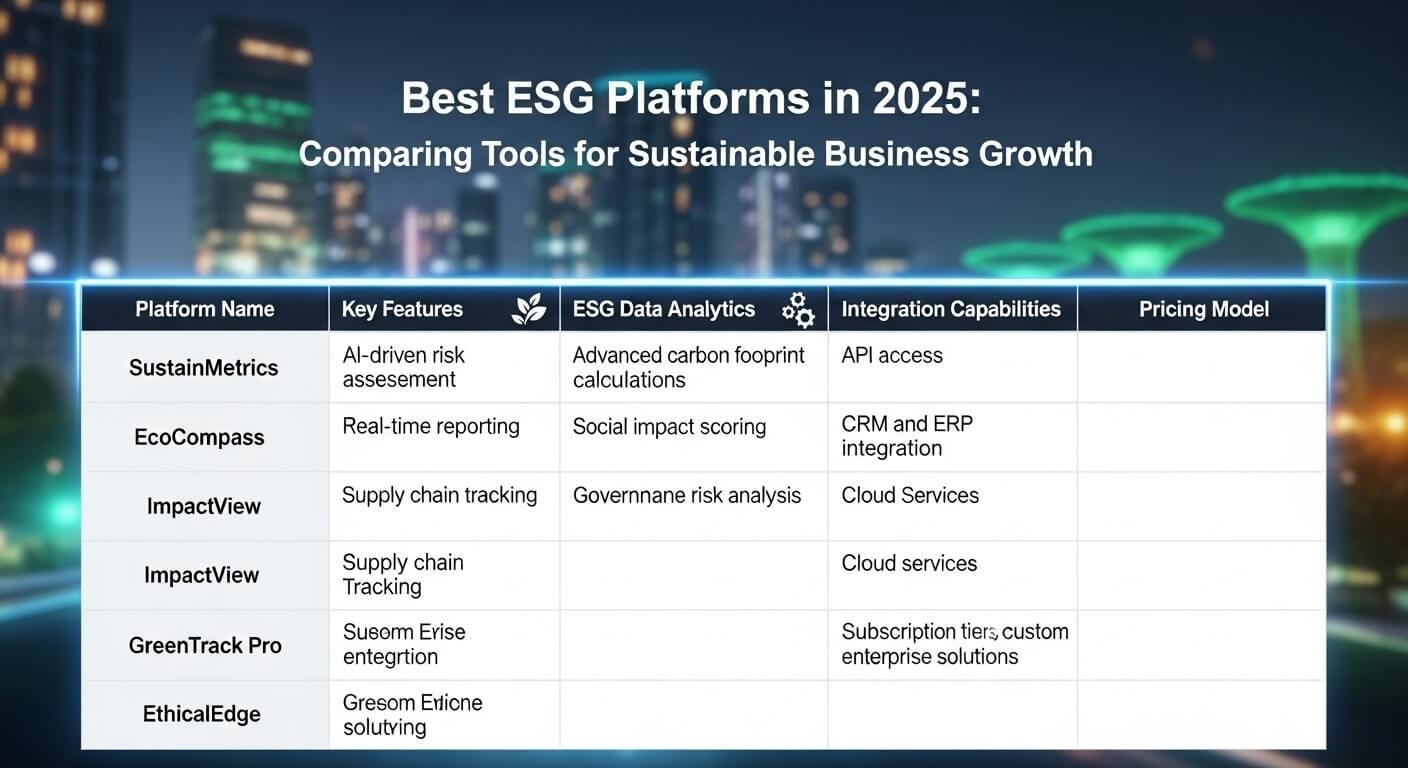
Below are some of the leading offerings in the market, each strong in different scenarios of esg platforms, sustainability data management or ESG compliance tools.
- Workiva: A cloud‑platform built for ESG reporting, financial disclosures and audit workflows. Good for organisations connecting sustainability with finance and risk.
- Pulsora: A purpose‑built platform covering data collection, emissions (Scope 1‑3), value‑chain and audit‑ready workflows — suited for organisations with complex operations.
- IBM Envizi ESG Suite: Enterprise‑scale solution with strong data ingestion, analytics and decarbonisation workflows. Good fit for large companies with heavy sustainability ambitions.
- EcoVadis: Focused more on supplier and third‑party risk assessment within the sustainability ecosystem — helpful when your supply‑chain extends globally.
- Novista / Novata: Tools tailored for private markets or smaller companies, helping simplify corporate sustainability reporting and value‑chain data.
When you review each tool, think about your business size, industry, data maturity and reporting goals. A large multinational will have different needs compared to a mid‑sized firm beginning its sustainability journey.
How to Choose the Right Platform for Your Business
Selecting the correct platform is more than picking features. Here’s a step‑by‑step approach:
a) Assess your maturity
Where are you now? If you’re just starting with sustainability disclosures and basic metrics, you might choose a simpler system. If you’re advanced (multiple frameworks, value‑chain emissions, audit requirements), you’ll need more advanced features.
b) Map your data sources & processes
List where your data lives: finance, operations, suppliers, HR etc. Then look at each esg platforms candidate and ask: “Can it integrate with these sources? How easy is the setup?”
c) Align your use‑cases
Do you primarily need ESG compliance tools to fulfil reporting requirements? Or do you aim for more: turning sustainability into business advantage via analytics and strategy? Your direction will influence which tool fits.
d) Review vendor support & cost
Even the best tool will deliver poorly if implementation is weak or support is lacking. Check how the vendor supports you during rollout and beyond. Also review the total cost (not just subscription) – training, onboarding, data‑cleaning matter.
e) Define ROI and success metrics
What will you measure? Fewer manual hours? Better disclosures? Reduced risk? Make sure you capture how investment in these platforms will deliver value — beyond just compliance.
Following these steps helps you avoid picking a tool that looks great on paper but fails to fit your business.
Implementing ESG Platforms – Best Practices
Once you’ve chosen a platform, implementation determines success. Here are best practices:
- Get executive leadership on board so sustainability and governance become part of strategic priorities.
- Define governance structures: set clear ownership of data, roles across finance, sustainability, operations.
- Start with a pilot: focus on high‑impact metrics first (for example top environmental or social KPIs).
- Automate data collection: set up links/integrations so data flows, minimizing manual inputs and errors.
- Use dashboards and analytics: make sure your platform supports corporate sustainability reporting that’s meaningful and insightful, not just number‑dump.
- Prepare for audits: ensure traceability, version history and governance built into your workflow.
- Keep improving: what works today may not work tomorrow. As regulations and stakeholder expectations evolve, so should your platform and processes.
With proper rollout, a platform becomes more than just a reporting tool — it becomes part of your strategic infrastructure.
Conclusion
In 2025, investing in the right esg platforms is a key step for companies aiming to transform sustainability from a compliance burden into a business advantage. These platforms enable better sustainability data management, support ESG reporting software capabilities, and act as powerful ESG compliance tools that drive meaningful corporate sustainability reporting.
By carefully reviewing features, selecting the tool that aligns with your needs, and implementing it with discipline, you’ll set your organisation up for stronger stakeholder trust, better risk management and sustainable growth. The journey isn’t simple—but the right platform makes it far more manageable.