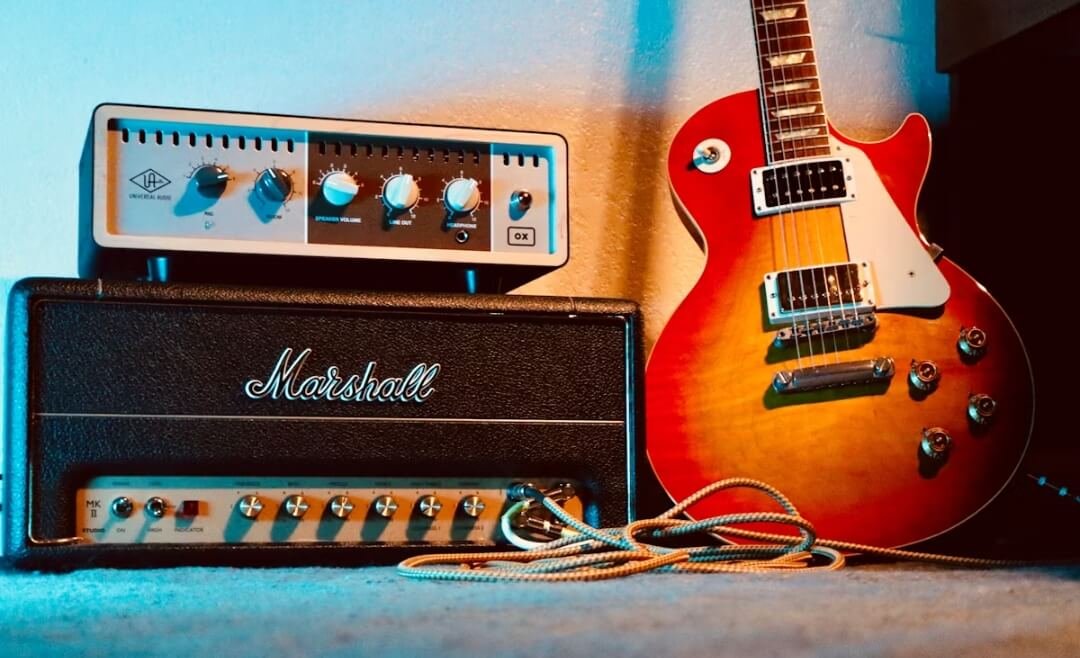
If you are struggling to find a tube amp that delivers authentic vintage Marshall tone without spending thousands of dollars, the marshall origin series offers a practical solution. Many guitarists want classic British crunch, pedal-friendly performance, and manageable volume levels for home, studio, and stage use. The Origin series was designed to solve those problems by combining old-school Marshall character with modern features like power scaling, effects loops, and DI outputs.
The Marshall Origin lineup has become popular among blues, classic rock, indie, and hard rock guitar players who want simple controls and expressive tube tone. In this complete guide, you will learn everything about the series, including models, sound quality, features, pros and cons, setup tips, and whether it is the right amp for your playing style.
What Is the Marshall Origin Series?
Marshall introduced the Origin series in 2018 as a return to vintage-inspired amplifier design. Unlike modern high-gain Marshall amps, the Origin series focuses on classic low-to-mid gain British tones inspired by older Plexi and JMP-style amplifiers.
The series includes:
- Origin 5C
- Origin 20C
- Origin 20H
- Origin 50C
- Origin 50H
These amps are available in both combo and head formats, giving guitarists flexibility for home practice, recording, and live performance.
The biggest attraction of the series is its simplicity. Instead of multiple channels and digital effects, the amps focus on pure tube tone and responsive dynamics.
Why Guitar Players Like the Marshall Origin
Many players choose the Origin series because it captures vintage Marshall character at a more affordable price compared to boutique or handwired amplifiers.
Popular reasons guitarists like the series include:
- Classic British rock tones
- Excellent pedal platform
- Simple controls
- Tube warmth and responsiveness
- Vintage appearance
- Power scaling for lower volumes
- Affordable price range
Reviewers from music publications praised the series for delivering authentic Marshall crunch with useful modern upgrades.
Marshall Origin Models Explained
Marshall Origin 5C
The Origin 5C is the smallest amp in the lineup. It is a 5-watt combo amp designed mainly for bedroom practice and studio use.
Key features include:
- Single-ended tube design
- EL84 power tube
- 8-inch speaker
- Effects loop
- Tilt control
- Compact size
This model is ideal for home players who want tube saturation at lower volumes.
According to reviewers, the amp delivers warm vintage tones and works well with pedals.
Marshall Origin 20C and 20H
The 20-watt versions are among the most popular amps in the series.
Main Features
- Two EL34 power tubes
- Power scaling
- Footswitchable boost
- Effects loop
- DI output
- Tilt control
- 10-inch speaker in combo version
The 20C combo and 20H head are versatile enough for recording, rehearsals, small gigs, and home practice.
Many reviewers say these amps deliver classic Marshall crunch when pushed at higher volumes.
Marshall Origin 50C and 50H
The 50-watt versions are designed for louder stages and players who want more clean headroom.
Features
- Two EL34 power tubes
- Three ECC83 preamp tubes
- Full-size cabinet sound
- Larger headroom
- More stage volume
- Classic Marshall dynamics
Reviewers describe the Origin 50H as a modern version of older JMP-style amplifiers.
The 50C combo is especially popular among pedal users because it handles overdrives and modulation pedals very well.
Key Features of the Marshall Origin Series
Tilt Control
One of the most unique features of the series is the Tilt knob.
Older Marshall amps had separate bright and normal channels. The Tilt control blends those two tonal voices together, allowing players to shape brightness and warmth easily.
This feature gives the amps more tonal flexibility than many vintage-style amplifiers.
Powerstem Power Scaling
The Powerstem system allows players to reduce output wattage while maintaining tube tone.
For example:
- 50W can switch to 10W or 5W
- 20W can switch to lower output settings
This feature makes the amps easier to use at home without losing natural tube breakup.
Effects Loop
Unlike many vintage-style amps, the Origin series includes an effects loop.
This allows delay, reverb, and modulation pedals to sound cleaner and more controlled.
Players who use pedalboards often consider this a major advantage.
Footswitchable Boost
The built-in boost adds more gain and punch for solos and heavier tones.
Some users enjoy the boost, while others prefer using external overdrive pedals instead. Community discussions show mixed opinions on the boost circuit.
DI Output
The amps also include a speaker-emulated DI output for direct recording and live setups.
This feature is useful for:
- Silent recording
- Home studios
- Live PA systems
- Audio interfaces
How Does the Marshall Origin Sound?
The sound of the marshall origin series is best described as:
- Vintage
- Open
- Dynamic
- Mid-focused
- Organic
The amps excel at:
- Blues
- Classic rock
- Indie rock
- Garage rock
- Early hard rock
Reviewers frequently compare the tone to older Marshall Plexi and JMP amplifiers.
Clean Tones
The clean tones are warm and articulate.
Compared to modern Marshall amps, the Origin series offers:
- More headroom
- Less compression
- Better pedal response
- More vintage feel
The 50-watt versions naturally provide more clean headroom than the 20-watt models.
Crunch and Overdrive
This is where the Origin series shines.
When the master volume and gain are pushed higher, the amps produce:
- Classic British crunch
- Rich harmonics
- Responsive dynamics
- Vintage rock overdrive
Many users say the real magic happens when the power section is pushed harder.
Is the Marshall Origin Good for Metal?
The Origin series is not designed for modern metal tones.
It can handle:
- Classic heavy metal
- Hard rock
- Early metal sounds
However, players wanting modern high-gain tones usually need:
- Distortion pedals
- Boost pedals
- External preamps
Community discussions show that the amp performs best with vintage-style rock and blues rather than modern metal.
Best Guitars for the Marshall Origin
The amp pairs well with many guitar styles.
Great Matches
- Gibson Les Paul
- Fender Stratocaster
- Telecaster
- SG-style guitars
- P90-equipped guitars
Humbuckers produce thicker crunch tones, while single coils deliver clearer vintage rock sounds.
Best Pedals for Marshall Origin
Because the amp works well as a pedal platform, many players pair it with:
Overdrive Pedals
- Tube Screamer
- Blues Driver
- Klon-style pedals
Distortion Pedals
- Marshall-in-a-box pedals
- RAT distortion
- OCD overdrive
Modulation and Delay
- Analog delay
- Chorus
- Reverb pedals
Many guitarists use the Origin as a foundation for pedal-based rigs.
Marshall Origin vs DSL Series
One of the most common comparisons is between the Origin and DSL series.
| Feature | Marshall Origin | Marshall DSL |
| Tone Style | Vintage | Modern |
| Gain Level | Low to medium | Medium to high |
| Best For | Blues and classic rock | Hard rock and metal |
| Channels | Single-channel | Multi-channel |
| Feel | Dynamic and open | More compressed |
| Pedal Platform | Excellent | Good |
Players wanting classic tones often prefer the Origin, while modern rock and metal players usually prefer the DSL series.
Common Criticisms of the Marshall Origin
Although many players love the series, some criticisms appear regularly in reviews and forums.
Limited High Gain
The amp is not designed for modern metal.
Needs Volume for Best Tone
Several users mention the amp sounds best when pushed louder.
No Built-In Reverb
Some players miss onboard reverb.
Stock Speaker Opinions
A few players replace the factory speaker for improved tone.
Best Settings for Marshall Origin
Vintage Blues Tone
- Gain: 5
- Master: 6
- Bass: 4
- Mid: 7
- Treble: 5
- Tilt: Mid position
Classic Rock Crunch
- Gain: 7
- Master: 7
- Presence: 6
- Treble: 6
- Mid: 8
Clean Pedal Platform
- Gain: 3
- Master: 5
- Bass: 5
- Mid: 6
- Treble: 5
Is the Marshall Origin Good for Home Use?
Yes, especially because of the power scaling feature.
However, tube amps are naturally loud, and some players still find the 20W models powerful for apartment use.
The Origin 5C is often the best option for bedroom guitarists.
Is the Marshall Origin Good for Gigging?
Absolutely.
The 20W and 50W models are widely used for:
- Club gigs
- Rehearsals
- Studio work
- Small-to-medium venues
The 50W versions provide more headroom for louder bands.
Who Should Buy the Marshall Origin?
The marshall origin series is ideal for:
- Blues guitarists
- Classic rock players
- Vintage tone lovers
- Pedalboard users
- Home studio musicians
- Guitarists wanting authentic tube feel
It may not be ideal for:
- Modern metal players
- Players wanting multiple channels
- Users needing built-in effects
Expert and Community Opinions
Professional reviewers consistently praise the Origin series for its authentic vintage tone and affordability.
Reddit users also highlight:
- Strong pedal compatibility
- Excellent classic crunch
- Great value for money
- Better performance when cranked louder
Conclusion
The marshall origin series successfully combines vintage Marshall character with modern convenience. These amps are simple, expressive, pedal-friendly, and capable of delivering authentic British tube tones at a reasonable price.
For guitarists focused on blues, classic rock, indie, and vintage-inspired sounds, the Origin lineup offers tremendous value. The power scaling, effects loop, and classic voicing make the amps practical for home, studio, and stage use.
While the series is not intended for ultra-modern high-gain metal, it excels at organic crunch, responsive cleans, and old-school Marshall feel. If your goal is classic tube tone with straightforward controls and real playing dynamics, the Marshall Origin series remains one of the strongest options in its category.