
Introduction
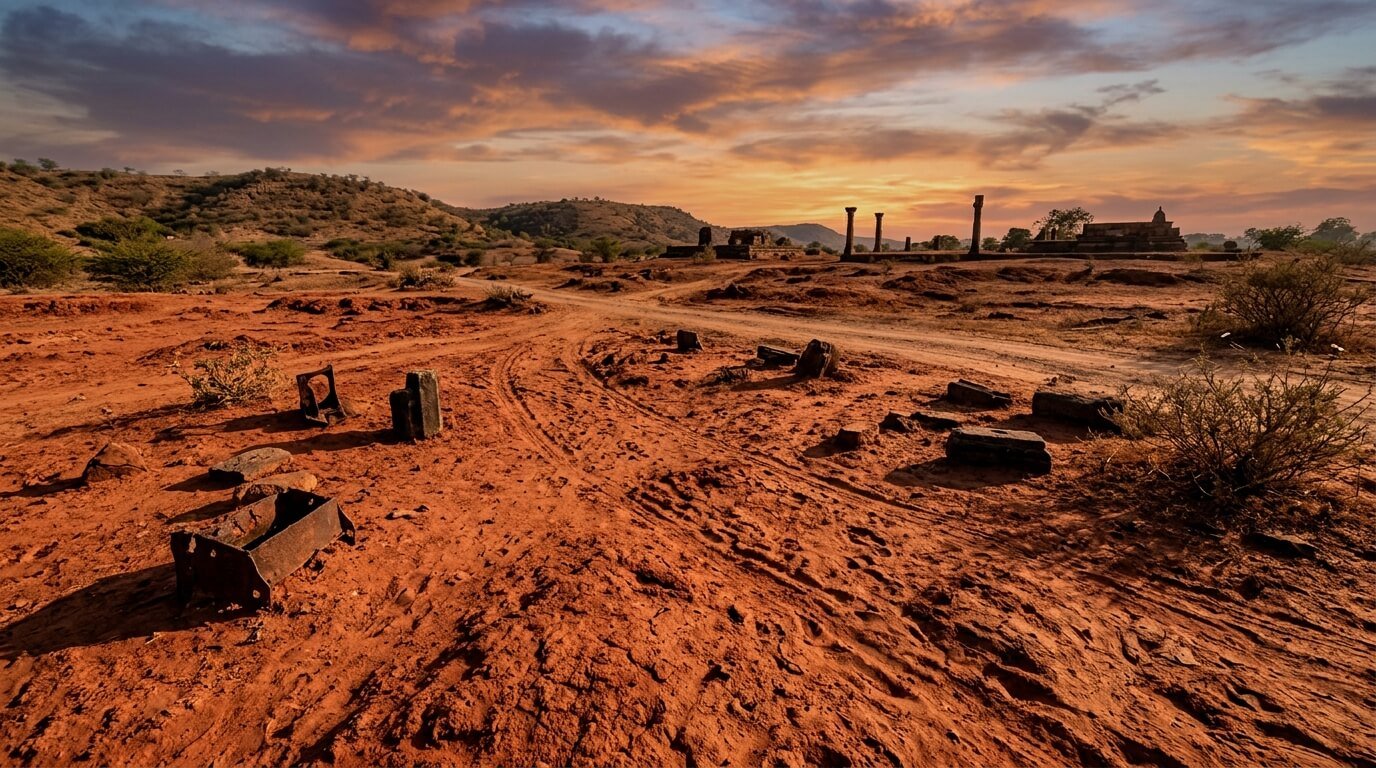
Many visitors to Kurukshetra are fascinated by one question: why is the soil in Kurukshetra red, and does it really have a connection with the Mahabharata war? The mystery surrounding kurukshetra red soil has generated debates among historians, archaeologists, spiritual scholars, and devotees for decades. While local traditions associate the reddish earth with the bloodshed of the great Mahabharata battle, scientific studies point toward natural geological factors. Understanding both perspectives helps uncover the true significance of this sacred land. In this article, we explore the history, mythology, science, and cultural importance behind the famous red soil of Kurukshetra.
What Is Kurukshetra?
Kurukshetra is a historically and spiritually significant region located in Haryana, India. It is widely recognized as the battlefield where the epic Mahabharata war was fought between the Pandavas and Kauravas.
The region is often called Dharmakshetra, meaning the “Field of Righteousness.” According to Hindu tradition, this sacred land witnessed one of the greatest philosophical teachings in human history when Lord Krishna delivered the Bhagavad Gita to Arjuna before the battle.
Today, Kurukshetra attracts pilgrims, researchers, historians, and tourists from across the world.
Understanding the Mystery of Kurukshetra Red Soil
One of the most discussed aspects of Kurukshetra is its reddish soil. Visitors often notice patches of earth that appear darker or redder than surrounding areas.
The question naturally arises:
- Is the soil red because of the Mahabharata war?
- Is it merely a geological phenomenon?
- Why does the legend continue to survive after thousands of years?
These questions have transformed the kurukshetra red soil into a topic that combines mythology, science, archaeology, and faith.
The Mahabharata Connection
According to local traditions and popular belief, the reddish color of the soil symbolizes the blood spilled during the eighteen-day Mahabharata war.
The Mahabharata describes a devastating conflict involving millions of warriors, elephants, horses, and chariots. The battlefield witnessed immense destruction and loss of life.
Many devotees believe that:
- The bloodshed permanently changed the character of the land.
- The red earth serves as a reminder of the sacrifices made during the war.
- The soil symbolizes the triumph of dharma over adharma.
While these beliefs are deeply rooted in cultural memory, historians generally view them as symbolic interpretations rather than literal explanations.
Scientific Explanation Behind the Red Soil
Geologists provide a different explanation for the color of the soil.
Red soil is commonly found in various parts of India due to the presence of iron oxide minerals. When iron reacts with oxygen over long periods, it creates a reddish appearance.
Several factors contribute to the soil color:
Iron Oxide Content
Iron-rich minerals are the primary reason behind red-colored soil formations.
Climate Conditions
Weathering processes caused by heat, moisture, and oxidation gradually alter the composition of the earth.
Natural Geological Formation
Many regions across India contain naturally occurring red soils that have no connection to historical battles.
From a scientific perspective, the reddish color is a natural geological phenomenon rather than evidence of ancient warfare.
Why the Debate Continues
Despite scientific explanations, the debate surrounding kurukshetra red soil remains active.
This is because the issue extends beyond geology and enters the realm of cultural heritage.
For believers:
- The soil represents sacred history.
- It symbolizes the events of the Mahabharata.
- Faith carries equal importance to scientific evidence.
For researchers:
- Physical evidence must support historical claims.
- Geological explanations provide measurable data.
- Legends are viewed as cultural narratives.
The coexistence of these viewpoints keeps the discussion alive.
Historical Significance of Kurukshetra
Kurukshetra has occupied a central place in Indian civilization for thousands of years.
Ancient texts mention the region as:
- A sacred pilgrimage destination.
- A center of Vedic learning.
- A land associated with King Kuru.
- A region connected with major religious traditions.
The area contains hundreds of pilgrimage sites, many of which are linked to events described in Hindu scriptures.
This historical depth contributes to the fascination surrounding its soil and landscape.
King Kuru and the Origin of the Sacred Land
The name Kurukshetra originates from King Kuru, a revered ancestor of both the Pandavas and Kauravas.
According to tradition, King Kuru performed severe penance and cultivated virtues such as:
- Truth
- Compassion
- Purity
- Sacrifice
- Righteousness
As a result, the land became spiritually blessed and earned the title of Dharmakshetra.
This sacred reputation existed long before the Mahabharata war.
Archaeological Perspectives
Archaeologists have conducted various excavations in and around the Kurukshetra region.
Findings include:
- Ancient pottery
- Settlement remains
- Tools and artifacts
- Evidence of early civilizations
These discoveries confirm that the region has been inhabited for thousands of years.
However, no archaeological evidence directly proves that the soil’s red color originated from the Mahabharata battle.
Researchers generally treat the red-soil legend as part of the area’s cultural history rather than a verified historical fact.
The Role of Faith and Oral Tradition
Indian civilization has preserved many historical memories through oral storytelling traditions.
Generations have passed down stories connecting the red soil to:
- The Mahabharata war
- Warrior sacrifices
- Divine intervention
- Moral lessons from the Bhagavad Gita
Whether historically accurate or not, these stories contribute significantly to the cultural identity of Kurukshetra.
Faith often preserves meanings that science cannot fully explain.
Important Places Associated with Kurukshetra
Brahma Sarovar
Brahma Sarovar is one of the most sacred water bodies in India.
According to tradition:
- Lord Brahma performed the first yajna here.
- Pilgrims take holy baths during solar eclipses.
- The site symbolizes creation and spiritual purification.
Thousands of devotees visit Brahma Sarovar annually.
Jyotisar
Jyotisar is believed to be the place where Lord Krishna delivered the Bhagavad Gita.
Major attractions include:
- The sacred banyan tree
- Gita memorial structures
- Light and sound shows
- Spiritual gatherings
For many visitors, Jyotisar represents the heart of Kurukshetra’s spiritual heritage.
Sannihit Sarovar
Another important pilgrimage destination, Sannihit Sarovar is believed to be the meeting point of sacred rivers.
Devotees perform rituals for ancestors and seek spiritual blessings.
Cultural Importance of Kurukshetra Red Soil
Beyond its physical appearance, the soil has become a cultural symbol.
It represents:
- Courage
- Sacrifice
- Dharma
- Historical memory
- Spiritual identity
Artists, writers, filmmakers, and religious scholars frequently reference the red soil when discussing the Mahabharata.
As a result, it has become part of India’s collective cultural imagination.
Tourism and the Red Soil Legend
Tourism authorities often highlight the legendary connection between the soil and the Mahabharata.
Visitors are drawn by:
- Historical curiosity
- Religious significance
- Archaeological interest
- Cultural storytelling
Many tourists specifically ask local guides about the origin of the red soil.
The legend therefore contributes significantly to regional tourism.
Mythology Versus Science
The discussion surrounding the kurukshetra red soil illustrates a broader challenge found in many ancient civilizations.
Mythological Perspective
- The soil reflects the bloodshed of the war.
- It preserves sacred memories.
- It symbolizes moral lessons from the epic.
Scientific Perspective
- Iron oxide causes the red color.
- Geological processes explain the phenomenon.
- No direct evidence links the soil to warfare.
Both perspectives continue to coexist.
Lessons from the Kurukshetra Debate
The debate teaches us several important lessons:
Respect for Cultural Heritage
Legends help preserve collective memory.
Importance of Scientific Inquiry
Research provides evidence-based explanations.
Value of Multiple Perspectives
History, faith, and science often complement one another rather than compete.
Understanding Symbolism
Not every cultural truth must be interpreted literally.
Frequently Asked Questions
Why is Kurukshetra soil red?
Scientists attribute the red color primarily to iron oxide and natural geological processes.
Is the red soil proof of the Mahabharata war?
No direct scientific or archaeological evidence confirms this claim.
Why do people associate the soil with the Mahabharata?
Local traditions and centuries of storytelling link the reddish earth to the bloodshed described in the epic.
Can tourists visit these locations?
Yes. Brahma Sarovar, Jyotisar, and other pilgrimage sites are open to visitors throughout the year.
Is Kurukshetra historically important?
Yes. It is one of India’s most significant historical, cultural, and spiritual regions.
Conclusion
The mystery of kurukshetra red soil continues to captivate believers, historians, and travelers alike. Scientific explanations point toward iron-rich geological formations, while traditional beliefs connect the red earth with the legendary Mahabharata war. Whether viewed through the lens of faith or science, the soil remains a powerful symbol of India’s cultural and spiritual heritage. The ongoing debate is not merely about the color of the earth—it is about how history, mythology, and human memory intertwine to shape our understanding of the past. As long as people continue to explore the legacy of Kurukshetra, the story of its red soil will remain one of the most fascinating discussions in Indian history.