
Introduction
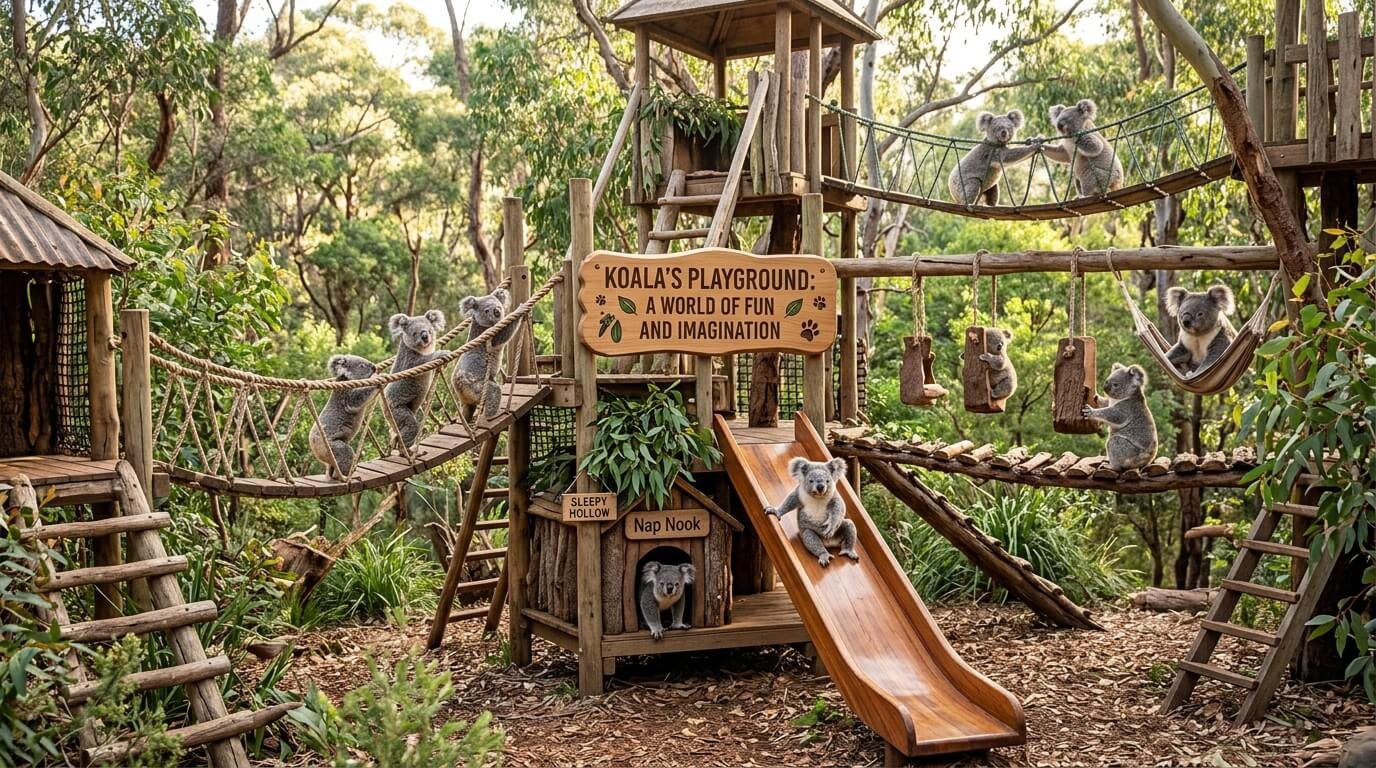
Many people think of koalas as sleepy animals that spend most of their lives resting in trees. This limited view creates a gap in understanding their natural behavior, environment, and playful instincts. The truth is, a koala’s playground is full of movement, curiosity, and quiet exploration. By learning about their habitat and daily activities, we can better appreciate their role in nature and support their conservation. This article explores the hidden world of koalas in a simple and engaging way, helping readers discover how imagination and nature come together in their lives.
What Is a Koala’s Natural Playground?
A koala’s playground is not a man-made space. It exists high in eucalyptus trees, where branches become pathways and leaves provide both food and comfort.
This natural playground includes:
- Tall eucalyptus forests
- Safe tree canopies
- Quiet surroundings with minimal disturbance
Koalas rely on these environments for survival. Their playground is carefully balanced with nature, where every branch plays a role in their daily routine.
Why Koalas Spend Most of Their Time in Trees
Koalas are arboreal animals, meaning they live in trees. Trees are not just their home—they are their entire world.
Key reasons include:
- Protection from predators
- Easy access to food (eucalyptus leaves)
- Comfortable resting spaces
Even though they sleep up to 18–20 hours a day, their active time is spent climbing, exploring, and interacting with their environment. This is where a koala’s playground truly comes to life.
Exploring the Elements of a Koala’s Playground
1. Eucalyptus Trees: The Heart of Their World
Eucalyptus trees are the center of a koala’s life. They provide:
- Food
- Shelter
- Climbing structures
Without these trees, their playground disappears.
2. Branch Networks: Nature’s Jungle Gym
Branches act like natural pathways. Koalas move slowly but confidently, using their strong limbs and sharp claws.
This network allows them to:
- Travel between feeding spots
- Find safe resting areas
- Explore their surroundings
3. Quiet Environment: A Stress-Free Zone
Koalas prefer calm environments. Noise and human activity can disturb their natural behavior.
A peaceful setting ensures:
- Better sleep cycles
- Reduced stress
- Natural movement patterns
Daily Activities Inside A Koala’s Playground
Even though koalas are known for sleeping, their active hours are meaningful.
Feeding Time
Koalas eat eucalyptus leaves, selecting only specific types that suit their digestion.
Climbing and Exploring
They move between trees to find fresh leaves and comfortable spots.
Social Interaction
Although mostly solitary, koalas communicate through sounds and scent marking.
These activities show that a koala’s playground is not inactive—it’s simply calm and rhythmic.
How Koalas Play and Interact with Their Environment
Koalas don’t “play” like pets or humans, but they interact with their surroundings in curious ways.
Examples include:
- Testing branches before climbing
- Exploring new tree areas
- Engaging in slow, deliberate movements
Their version of play is subtle but essential for survival and adaptation.
The Role of Imagination in Understanding Wildlife
When we think of a playground, we imagine fun, movement, and creativity. Applying this idea to koalas helps us better connect with them.
It allows us to:
- Visualize their daily life
- Appreciate their environment
- Build emotional awareness about conservation
This imaginative approach makes a koala’s playground more relatable and engaging.
Threats to a Koala’s Playground
Koalas face several challenges that threaten their natural habitat.
1. Deforestation
Cutting down eucalyptus trees destroys their home.
2. Climate Change
Rising temperatures affect leaf quality and availability.
3. Urban Development
Expanding cities reduce forest areas.
These threats are serious and require global attention.
How Humans Can Help Protect Koalas
Protecting koalas starts with awareness and action.
Simple Ways to Help:
- Support wildlife conservation programs
- Reduce paper and wood waste
- Spread awareness about habitat protection
Every small step contributes to preserving a koala’s playground for future generations.
Fun Facts About Koalas
- Koalas have fingerprints similar to humans
- They sleep up to 20 hours a day
- Baby koalas are called “joeys”
- They have a strong sense of smell
These facts make them even more fascinating.
Why Koalas Matter in the Ecosystem
Koalas play an important role in maintaining ecological balance.
They help:
- Control eucalyptus growth
- Support biodiversity
- Indicate forest health
Their presence reflects a healthy environment.
Creating Awareness Through Education and Content
Blogs, articles, and educational content help spread knowledge about wildlife.
By reading and sharing information:
- More people become aware
- Conservation efforts gain support
- Wildlife protection improves
This is why writing about a koala’s playground is important.
Conclusion: A Quiet World Worth Protecting
A koala’s life may seem simple, but it is deeply connected to nature. Their playground is not filled with noise or fast movement—it is calm, balanced, and essential for their survival. By understanding their environment, we can shift our perspective and recognize the beauty in their slow, peaceful existence. Protecting this world is not just about saving one species; it is about preserving nature itself. When we value and protect a koala’s playground, we take a step toward a more sustainable and compassionate future.