
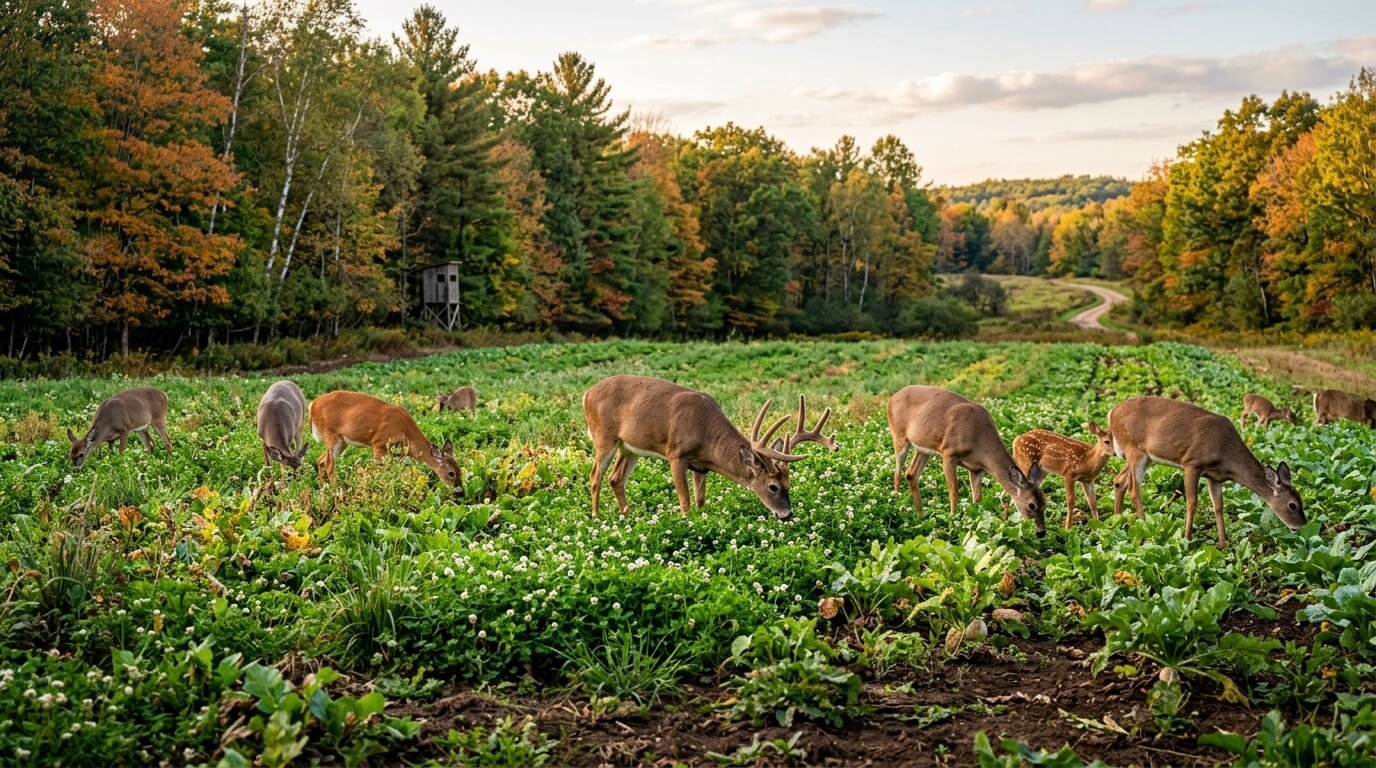
Introduction
Many hunters and landowners struggle to attract and hold deer on their property because natural food sources change throughout the year. Poor soil, choosing the wrong seeds, and planting at the wrong time can lead to disappointing results. The solution is to create well-planned deer food plots that provide nutritious forage year-round. With proper soil preparation, the right seed selection, and regular maintenance, food plots can help improve deer health and increase hunting opportunities.
Understanding Deer Food Plots
A deer food plot is an area planted with crops that provide food for whitetail deer. These plots can be small or large and are designed to supply nutrition during different seasons.
Food plots help:
- Attract deer to your property.
- Improve herd health.
- Support antler growth.
- Increase fawn survival.
- Create better hunting opportunities.
Benefits of Deer Food Plots
Creating deer food plots offers several advantages:
Better Nutrition
Plants like clover and soybeans provide high levels of protein, which support antler growth and healthy body development.
Attract Deer Year-Round
Different plants provide food during spring, summer, fall, and winter.
Improve Hunting Success
Food plots can encourage deer to visit your property regularly, making deer movement more predictable.
Improve Habitat
Food plots can provide shelter and improve overall wildlife habitat.
Choosing the Best Location for Your Deer Food Plot
Location is one of the most important factors for success.
Look for:
Areas Near Deer Travel Routes
Choose locations close to bedding areas, trails, and water sources.
Good Sunlight
Most crops need at least 4 to 6 hours of sunlight each day.
Well-Drained Soil
Avoid areas that stay wet after rain.
Easy Access
Make sure you can reach the plot for planting and maintenance.
Long and narrow plots along woods often work better than large open fields because deer feel safer near cover.
How Big Should a Deer Food Plot Be?
Food plots can be successful in different sizes.
- Small plots: ¼ to ½ acre.
- Medium plots: 1 to 3 acres.
- Large plots: More than 5 acres.
Experts recommend dedicating around 5% to 10% of your property to food plots. Even small plots can attract deer if they are planted correctly.
Soil Preparation and Soil Testing
Good soil preparation is the foundation of productive deer food plots.
Step 1: Conduct a Soil Test
Testing the soil tells you:
- Soil pH.
- Nitrogen levels.
- Phosphorus levels.
- Potassium levels.
Most food plot crops perform best with a pH between 6.0 and 7.0. A soil test helps determine the amount of fertilizer and lime needed.
Step 2: Remove Existing Vegetation
Clear weeds and grasses before planting.
Methods include:
- Mowing.
- Tilling.
- Using herbicides.
- Controlled burning.
Removing competition gives seeds the best chance to grow.
Step 3: Prepare a Seedbed
After clearing the area:
- Break up the soil.
- Level the ground.
- Create good seed-to-soil contact.
Proper seedbed preparation improves germination and plant growth.
Lime and Fertilizer Requirements
Lime
Lime raises soil pH and helps plants absorb nutrients more effectively.
Apply lime several months before planting for best results.
Fertilizer
Different plants require different nutrients.
Common fertilizers include:
- Nitrogen (N)
- Phosphorus (P)
- Potassium (K)
Always follow soil test recommendations rather than guessing.
Best Deer Food Plot Seeds
Choosing the right plants is essential because deer prefer different foods throughout the year.
Clover – The Most Popular Choice
Clover is considered one of the best options for beginners.
Benefits:
- High protein content.
- Easy to maintain.
- Grows for several years.
- Attracts deer from spring through fall.
Types include:
- White clover
- Red clover
- Crimson clover
Clover contains around 20–30% protein and remains one of the most reliable food plot plants.
Brassicas
Brassicas include:
- Turnips
- Radishes
- Kale
- Rape
These plants become highly attractive after the first frost because starches convert into sugars.
Brassicas are excellent for fall and winter food plots.
Chicory
Chicory is drought tolerant and produces deep roots.
Advantages include:
- High protein levels.
- Long growing season.
- Works well with clover mixtures.
- Performs well during hot weather.
Many hunters use chicory for summer and early fall nutrition.
Soybeans
Soybeans are among the highest-protein crops available.
Benefits include:
- Excellent summer nutrition.
- Promotes antler growth.
- Supports lactating does and fawns.
Soybeans are best planted during spring.
Oats and Rye
These cereal grains provide quick growth and attract deer during cool seasons.
They are ideal for:
- Fall planting.
- Winter feeding.
- Combining with clover and brassicas.
They are easy to establish and are commonly used in food plot mixes.