
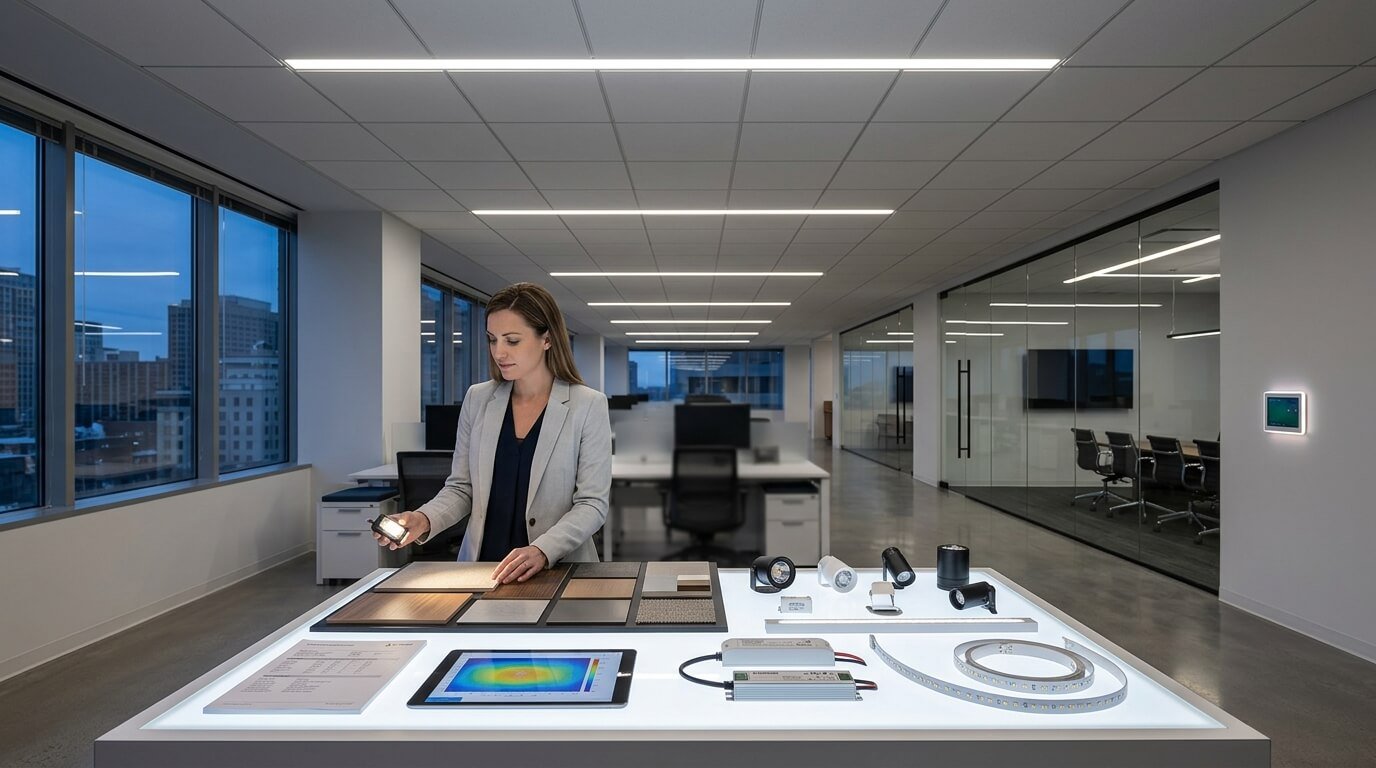
Why Quality Matters in Modern LED Lighting
LED lighting has become a preferred choice for commercial, residential, and architectural applications because it combines energy efficiency with long service life. However, choosing the right lighting solution involves more than selecting a product with high brightness. Factors such as durability, installation flexibility, waterproof protection, and color consistency all influence long term performance.
A dependable lighting system helps reduce maintenance costs while providing stable illumination for different environments. Whether the project involves retail stores, office buildings, signage, or decorative installations, selecting products designed for the intended application improves both efficiency and reliability.
Understanding Different Types of LED Products
Modern lighting projects often require more than one type of LED product. Flexible LED strips are widely used for cove lighting, architectural accents, display cabinets, corridors, and home decoration because they can fit into narrow spaces. LED modules are commonly chosen for signboards, channel letters, and advertising displays where consistent brightness is essential.
COB LED strips have also become increasingly popular because they produce smooth, continuous light without visible light dots. Their free cutting design helps overcome installation limitations in complex layouts. Compared with traditional SMD strips, COB technology delivers a cleaner appearance and requires less maintenance. For projects requiring longer lighting runs, 24V LED strips also minimize voltage drop compared with 12V systems, allowing brightness to remain more consistent from one end of the strip to the other.
What to Look for in a Reliable LED Manufacturing Partner
When selecting lighting products, manufacturing standards play an important role in product quality. A supplier with established production processes, technical support, and quality inspection procedures is more likely to provide consistent results across different projects.
Working with an experienced LED Strip manufacturer can also make it easier to choose products that match specific installation requirements. Features such as IP65 and IP68 waterproof protection, high quality PCB materials, multiple color temperatures, and flexible cutting lengths provide greater versatility for indoor and outdoor applications.
Companies with years of manufacturing experience often offer a wider selection of lighting products, including RGBW strips, COB strips, silicone neon lights, controllers, and accessories designed for different commercial environments.
Choosing the Right LED Strip for Your Project
Every project has different lighting requirements. Some applications prioritize brightness, while others require waterproof protection or color accuracy.
For example, 5050 LED strips with 300 LEDs over five meters are commonly selected for decorative and architectural lighting. Available in IP65 and IP68 waterproof versions, these strips are suitable for canopies, corridors, windows, archways, signage backlighting, holiday decorations, and DIY lighting projects. Their 120 degree viewing angle, 100 mm cutting length, and 16.6 mm LED spacing provide flexibility during installation.
RGBW 5050 LED strips offer RGB plus warm white lighting with a 24V DC input, brightness of approximately 1200 lumens, and color temperatures ranging from 2700K to 3000K. Other popular options include 3528, 2835, and 3014 LED strips, each designed to meet different brightness and power requirements.
Why Product Availability and Technical Support Matter
Large commercial projects often require reliable product availability along with technical assistance before and after installation. Access to compatible controllers, power supplies, connectors, and installation accessories helps reduce delays during project completion.
Businesses looking for a dependable LED module distributor should also consider the availability of technical documentation, installation guidance, and product compatibility. Reliable support helps installers choose appropriate controllers, voltage ratings, waterproof levels, and accessories for each lighting system.
RGB touch controllers, for example, provide multiple color modes, RF remote control, PWM dimming, and operating temperatures ranging from negative 30 degrees Celsius to positive 60 degrees Celsius, making them suitable for various indoor lighting applications.
How LED Modules Improve Signage and Advertising Displays
LED modules are widely used in illuminated signage because they provide uniform lighting while consuming relatively low power. Modern SMD5050 RGB modules offer a lifespan of up to 50,000 hours and are suitable for light boxes, channel letters, decorative building outlines, shopping centers, cafés, furniture lighting, exhibition displays, and entertainment venues.
Many modules are designed with flexible circuit boards, allowing them to bend around curved surfaces while maintaining reliable performance. Waterproof versions also provide additional protection for outdoor installations exposed to rain and humidity.
Common Industries Using Professional LED Lighting
Professional LED lighting solutions are now found across many industries. Retail stores use LED strips to highlight products, hotels incorporate architectural lighting into interior designs, while commercial buildings rely on efficient lighting systems for energy savings. Event organizers also use decorative LED lighting to create visually appealing environments for exhibitions and seasonal displays.
Established in 2014, Shenzhen Dekingled Co., Ltd. manufactures a wide range of LED lighting products, including its featured Free Cutting 12V and 24V COB LED Strip. The company focuses on fast delivery, cost effective production, technical support, and consistent product quality. For product inquiries, customers may contact Emily or Tony Wang through emily_led@dekingled.com or tonywang.deking@gmail.com. The manufacturing facility is located on the 4th Floor, Building C, SanMing Industrial Park, Shiyan Town, Bao’an District, Shenzhen, China.
Final Thoughts
Selecting the right LED lighting solution involves understanding product specifications, installation requirements, and long term performance expectations. Comparing features such as voltage, waterproof ratings, brightness, cutting flexibility, and application suitability helps ensure the lighting system meets project needs. By working with experienced manufacturers and choosing products that match the intended environment, businesses and installers can achieve dependable lighting performance across a wide range of commercial and architectural applications.