
Introduction
Finding a reliable maharashtra dam name list can be difficult because information is often scattered across different websites, government resources, and educational portals. Students, travelers, competitive exam aspirants, and geography enthusiasts frequently struggle to find accurate details about dam locations, rivers, capacities, and their importance. The solution is to have a comprehensive guide that brings together the most important dams in Maharashtra, their locations, associated rivers, and key facts in one place. This article provides exactly that, following a semantic SEO approach and backed by trusted information sources.
Maharashtra and Its Importance in Dam Construction
Maharashtra is one of India’s leading states in water resource development. The state has more than 1,800 dams, including major, medium, and minor projects. These dams play a crucial role in irrigation, drinking water supply, flood control, hydroelectric power generation, fisheries, and industrial development. Many of these dams are built across important river systems such as the Godavari, Krishna, Bhima, Tapi, and Vaitarna rivers.
The state’s varied geography, ranging from the Western Ghats to the Deccan Plateau, makes dam construction essential for water conservation and agricultural growth.
Maharashtra Dam Name List
Below is a list of some of the most significant dams in Maharashtra:
| Dam Name | River | District |
| Jayakwadi Dam | Godavari River | Chhatrapati Sambhajinagar (Aurangabad) |
| Koyna Dam | Koyna River | Satara |
| Ujjani Dam | Bhima River | Solapur |
| Bhatsa Dam | Bhatsa River | Thane |
| Wilson Dam (Bhandardara) | Pravara River | Ahmednagar |
| Yeldari Dam | Purna River | Parbhani |
| Isapur Dam | Penganga River | Nanded |
| Khadakwasla Dam | Mutha River | Pune |
| Panshet Dam | Ambi River | Pune |
| Warna Dam | Warna River | Kolhapur |
| Radhanagari Dam | Bhogavati River | Kolhapur |
| Upper Vaitarna Dam | Vaitarna River | Nashik |
| Girna Dam | Girna River | Nashik |
| Mula Dam | Mula River | Ahmednagar |
| Totladoh Dam | Pench River | Nagpur |
These dams support millions of people through irrigation, water supply, and power generation.
Top 10 Largest Dams in Maharashtra
1. Jayakwadi Dam
Jayakwadi Dam is among the largest and most important dams in Maharashtra. Built on the Godavari River, it serves a vast agricultural region in Marathwada. The reservoir formed by the dam is known as Nath Sagar. It supports irrigation, drinking water supply, and industrial needs across multiple districts.
2. Koyna Dam
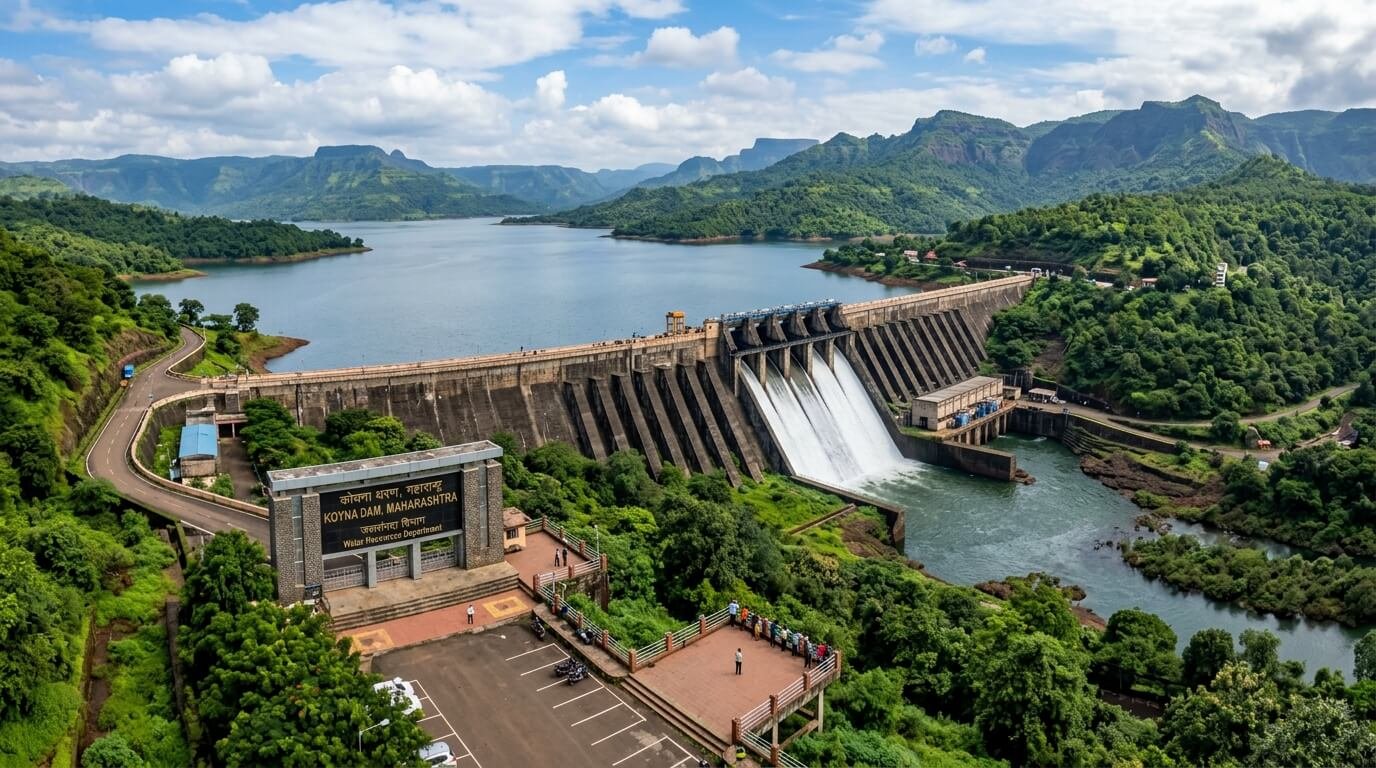
Koyna Dam is one of India’s most significant hydroelectric projects. Located in Satara district, it creates the Shivaji Sagar reservoir and has a power generation capacity of nearly 2,000 MW.
3. Ujjani Dam
Built on the Bhima River, Ujjani Dam is an essential source of irrigation and drinking water for Solapur district and surrounding regions.
4. Bhatsa Dam
Bhatsa Dam is an important source of drinking water for the Mumbai Metropolitan Region. It also supports irrigation and flood management.
5. Warna Dam
Located in Kolhapur district, Warna Dam supports agriculture and water supply throughout western Maharashtra.
6. Wilson Dam
Wilson Dam, also known as Bhandardara Dam, is one of the oldest dams in Maharashtra and a popular tourist destination.
7. Upper Vaitarna Dam
This dam plays a major role in supplying water to Mumbai and nearby urban centers.
8. Yeldari Dam
Situated on the Purna River, Yeldari Dam is crucial for irrigation in the Marathwada region.
9. Isapur Dam
One of the largest earth-fill dams in Maharashtra, Isapur Dam serves irrigation and drinking water needs.
10. Radhanagari Dam
Known for its historical significance, Radhanagari Dam supports agriculture and water management in Kolhapur district.
Major Rivers Associated with Maharashtra Dams
Many dams in Maharashtra are constructed on major rivers and their tributaries.
Godavari River Basin
- Jayakwadi Dam
- Yeldari Dam
- Gangapur Dam
Krishna River Basin
- Koyna Dam
- Warna Dam
- Dhom Dam
Bhima River Basin
- Ujjani Dam
- Chaskaman Dam
Tapi River Basin
- Hatnur Dam
Vaitarna River Basin
- Upper Vaitarna Dam
- Middle Vaitarna Dam
These river systems are essential for sustaining agriculture and urban populations throughout Maharashtra.
Koyna Dam: Maharashtra’s Hydroelectric Powerhouse
Koyna Dam deserves special attention due to its national importance.
Key Facts
- Location: Satara District
- River: Koyna River
- Completion Year: 1964
- Reservoir: Shivaji Sagar Lake
- Power Capacity: Around 1,960 MW
The Koyna Hydroelectric Project is one of India’s largest hydroelectric facilities. It contributes significantly to Maharashtra’s electricity production and supports irrigation activities across nearby districts.
Jayakwadi Dam: Lifeline of Marathwada
Jayakwadi Dam is often called the lifeline of Marathwada because of its immense contribution to agriculture and drinking water supply.
Important Features
- Built on the Godavari River
- Creates the Nath Sagar reservoir
- Supports five major districts
- One of the largest earthen dams in Asia
The dam provides irrigation to vast agricultural lands and supplies drinking water to numerous towns and villages.
Ujjani Dam and Its Regional Importance
Ujjani Dam is a major reservoir on the Bhima River.
Benefits
- Irrigation support
- Drinking water supply
- Fisheries development
- Small hydropower generation
- Flood management
It is among the largest reservoirs in Maharashtra and serves both Maharashtra and neighboring regions.
Importance of Dams in Maharashtra
Irrigation
Agriculture remains a major economic activity in Maharashtra. Dams ensure water availability during dry seasons and support crop cultivation.
Drinking Water Supply
Cities including Mumbai, Pune, Nashik, and Aurangabad depend heavily on dam reservoirs for drinking water.
Hydroelectric Power
Projects such as Koyna contribute substantially to clean energy production.
Flood Control
Dams help regulate river flow and reduce flood risks during heavy monsoon rainfall.
Industrial Development
Many industrial zones depend on water supplied by major reservoirs.
Maharashtra Dam Name List for Competitive Exams
Questions about Maharashtra dams frequently appear in:
- MPSC Exams
- UPSC Geography
- SSC Exams
- State Government Recruitment Tests
- Railway Exams
- Teaching Eligibility Tests
Important dams often asked in exams include:
- Jayakwadi Dam
- Koyna Dam
- Ujjani Dam
- Bhatsa Dam
- Wilson Dam
- Isapur Dam
- Yeldari Dam
- Radhanagari Dam
Remembering the river associated with each dam can be particularly helpful for exam preparation.
Interesting Facts About Maharashtra Dams
Maharashtra Has One of the Highest Numbers of Dams in India
The state contains more than 1,800 dams of varying sizes.
Koyna Dam Is Famous for Power Generation
It remains one of India’s largest hydroelectric projects.
Jayakwadi Supports Multiple Districts
Several districts in Marathwada rely on Jayakwadi Dam for irrigation and drinking water.
Ujjani Reservoir Is Among the Largest
It plays a critical role in regional water management and agriculture.
Many Dams Are Tourist Attractions
Reservoirs, scenic surroundings, boating facilities, and wildlife attract visitors throughout the year.
Future Challenges for Maharashtra’s Dams
While dams bring numerous benefits, they also face challenges:
- Climate change impacts
- Irregular monsoon patterns
- Sedimentation in reservoirs
- Increasing water demand
- Dam safety monitoring requirements
Modern technologies and improved water management practices are being adopted to address these concerns.
Conclusion
Understanding the maharashtra dam name list is important for students, researchers, travelers, and anyone interested in geography and water resources. Maharashtra’s dams support agriculture, drinking water supply, electricity generation, industry, and flood control. Major projects such as Jayakwadi Dam, Koyna Dam, Ujjani Dam, Bhatsa Dam, and Wilson Dam have transformed the state’s economy and improved the lives of millions. As Maharashtra continues to grow, these dams will remain vital assets for sustainable development, water security, and energy production. By learning about their locations, rivers, and unique features, you gain a deeper appreciation of the state’s remarkable water infrastructure.