Introduction
Many sewing projects fail not because of poor stitching, but because people do not understand nahttypen and choose the wrong seam for their fabric. This leads to weak seams, uncomfortable clothing, and garments that wear out too quickly. The solution is learning the correct seam types, their meaning, and when to use them, so every sewing project becomes stronger, cleaner, and more professional.
What Is Nahttypen? Meaning and Definition
The term nahttypen comes from the German language and means types of seams. In sewing, it describes the different methods used to join pieces of fabric together.
Nahttypen definition (simple explanation)
A seam is the line where two fabrics are stitched together. Different seam types are used for different purposes, such as strength, flexibility, decoration, or comfort. Understanding seam types helps you choose the best method for each fabric and garment.
This knowledge is important for beginners, home sewists, and professionals alike.
Why Seam Types Are Important in Sewing
Seams are the foundation of any garment. Even high-quality fabric will not last if the seam is wrong.
Seam importance in sewing:
- They hold the garment together
- They affect comfort and movement
- They control fabric fraying
- They improve garment life
- They give a neat inside finish
Choosing the correct seam helps clothes look better and last longer.
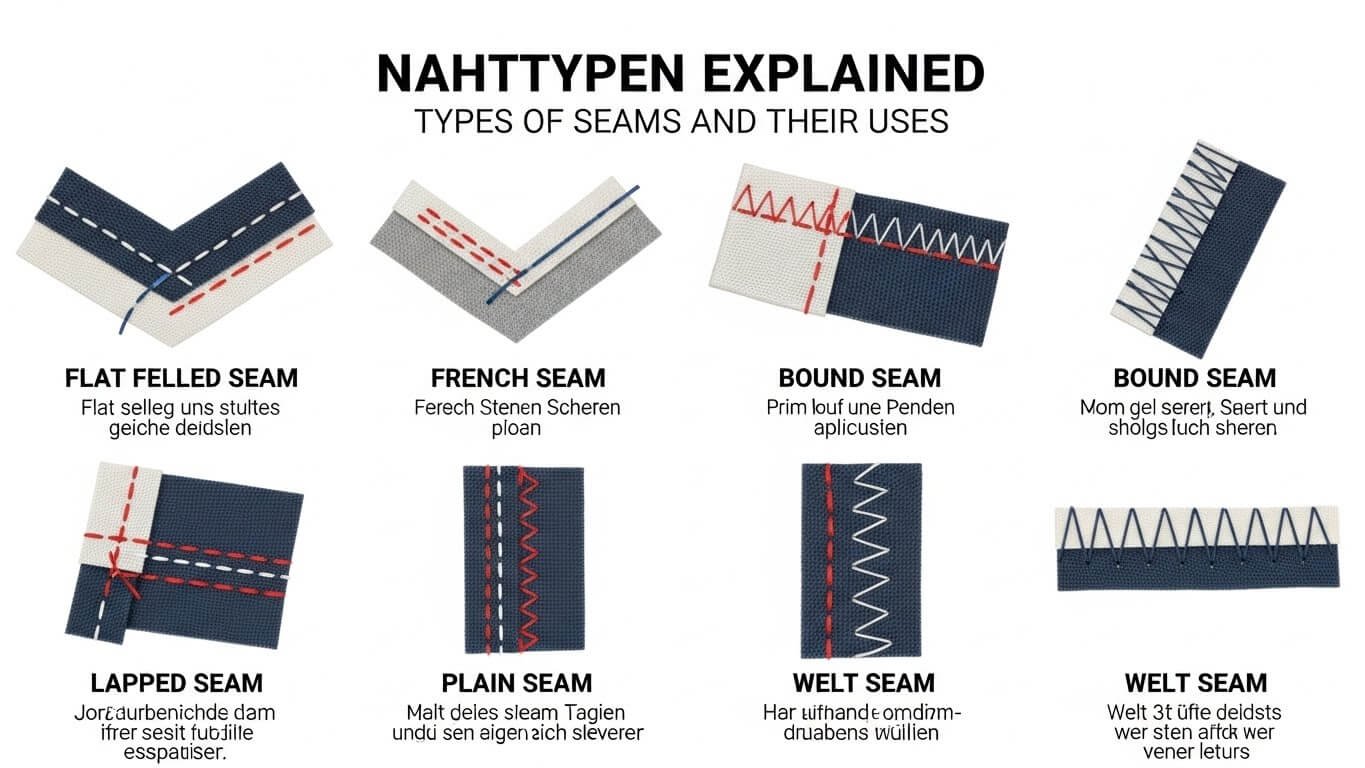
Types of Nahttypen Used in Sewing
There are many seam styles, but some are used more often because they work well for most fabrics and garments. These types of nahttypen are commonly found in home sewing and garment production.
Plain Seam
This is the most basic seam and the first one most people learn.
How it works:
Two fabric pieces are placed right sides together and stitched straight.
Best for:
- Cotton fabrics
- Shirts and dresses
- Home décor items
Pros:
- Easy to sew
- Good for beginners
Cons:
- Raw edges must be finished to stop fraying
French Seam
A French seam hides raw edges inside the seam.
Best for:
- Light fabrics
- Sheer and delicate materials
Pros:
- Very clean and neat
- Comfortable to wear
Cons:
- Not suitable for thick fabric
Flat-Felled Seam
This seam is strong and durable.
Best for:
- Jeans
- Workwear
- Children’s clothing
Pros:
- Long-lasting
- No raw edges
Cons:
- Uses more fabric
Overlock Seam
An overlock seam is made using a serger machine.
Best for:
- Stretch fabrics
- Sportswear
- Knit garments
Pros:
- Prevents fraying
- Allows stretch
Cons:
- Requires special equipment
Zigzag Seam
This seam stretches with the fabric.
Best for:
- Elastic materials
- Stretch garments
Pros:
- Easy to sew
- Flexible
Cons:
- Less strong than reinforced seams
Bound Seam
In this seam, raw edges are covered with binding tape.
Best for:
- Jackets
- Decorative clothing
Pros:
- Attractive finish
- Stops fraying
Cons:
- Adds bulk
Choosing the Right Seam for Fabric Type
Correct seam choice depends on fabric weight and use.
Lightweight fabrics:
- French seams
- Simple seams with finishing
Medium-weight fabrics:
- Plain seams
- Bound seams
Heavy fabrics:
- Flat-felled seams
- Double-stitched seams
Stretch fabrics:
- Overlock seams
- Zigzag seams
This approach helps avoid tearing and discomfort.
Nahttypen in Sewing for Modern Garments
In modern clothing, nahttypen in sewing go beyond basic seams. Performance clothing often uses flat seams to reduce skin irritation, while waterproof garments use sealed seams to block moisture. These seam techniques improve comfort, durability, and function in everyday wear.
Common Mistakes People Make With Seams
Many problems come from simple mistakes.
Common errors:
- Using stiff seams on soft fabric
- Ignoring seam finishing
- Not testing seams before sewing
- Choosing strength over comfort
Avoiding these mistakes improves final results.
Simple Tips for Better Sewing Results
- Always test seams on scrap fabric
- Press seams after stitching
- Match thread strength to fabric
- Choose seams based on garment use
These small steps make a big difference.
Why Learning Seam Types Improves Sewing Skills
When you understand nahttypen, you gain confidence in sewing. You make stronger garments, reduce fabric waste, and achieve a clean, professional finish. This knowledge is essential for long-term sewing success.
Conclusion
Understanding nahttypen helps you choose the right seam for every fabric and garment. Each seam type has a purpose, and using it correctly improves strength, comfort, and appearance. By learning seam meanings, definitions, and practical uses, you can avoid common mistakes and create high-quality clothing that lasts.