
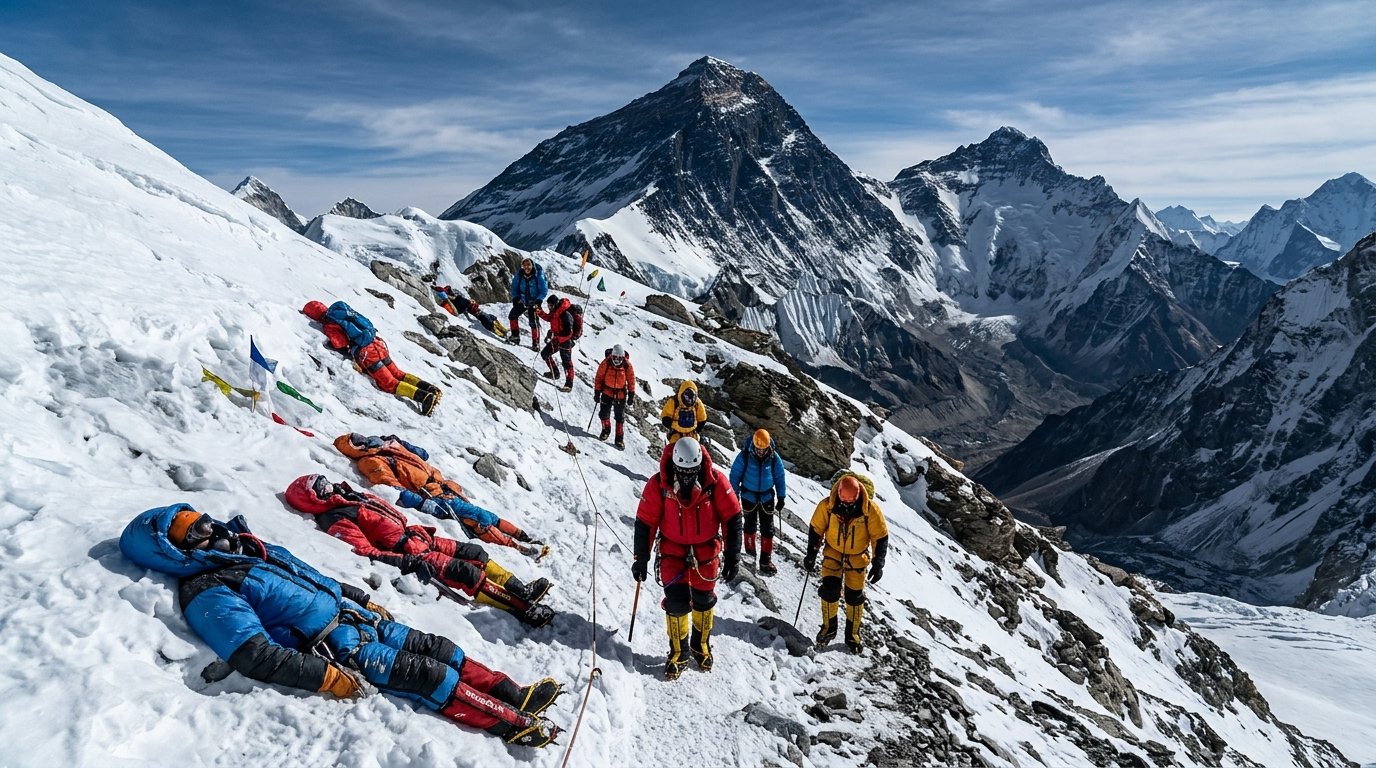
Rainbow valley everest is one of the most mysterious and talked-about locations on Mount Everest. While its name sounds colorful and beautiful, the reality is heartbreaking. This area reminds climbers of the mountain’s extreme dangers and the price many have paid while chasing the dream of reaching the world’s highest peak.
Thousands of people attempt to climb Mount Everest every year. Many succeed, but some never return. Rainbow valley everest has become a symbol of both human determination and the harsh power of nature.
This guide explains what rainbow valley everest is, where it is located, why it has this name, and why it continues to fascinate people around the world.
What Is Rainbow Valley Everest?
Rainbow valley everest is an informal name given to a section of Mount Everest located high on the mountain’s northeastern route. It lies within the infamous Death Zone, above approximately 8,000 meters (26,247 feet), where oxygen levels become dangerously low.
Despite the name, it is not an actual valley. Instead, it refers to a steep stretch of snow and rock where the brightly colored climbing suits of deceased mountaineers remain visible against the white landscape. The vivid jackets create a “rainbow” effect, giving the area its unusual name.
Where Is Rainbow Valley Everest Located?
Rainbow valley everest is found on the north side of Mount Everest, near the Northeast Ridge in Tibet. It sits just below the summit ridge, where climbers make their final push toward the top.
Because this section is within the Death Zone, every step demands enormous physical effort. Rescue operations become extremely difficult, making this one of the most dangerous places on Earth.
Why Is It Called Rainbow Valley Everest?
The name rainbow valley everest does not come from flowers or natural rainbows.
Instead, it comes from the colorful climbing gear worn by mountaineers who lost their lives during summit attempts. Bright red, yellow, blue, orange, and green jackets remain visible in the snow for years because of the freezing temperatures.
The name reflects the mountain’s harsh reality rather than its beauty.
Why Do Bodies Remain on Mount Everest?
Many people wonder why climbers are not brought down from rainbow valley everest.
There are several reasons:
- Extremely thin air reduces physical strength.
- Temperatures often fall below -40°C.
- Strong winds create life-threatening conditions.
- A frozen body can weigh hundreds of kilograms with equipment.
- Recovery missions put rescuers at serious risk.
For these reasons, recovering bodies from such high altitudes is often impossible or extremely dangerous.
Understanding the Death Zone
The Death Zone begins above 8,000 meters.
At this altitude:
- Oxygen levels are about one-third of those at sea level.
- The body slowly begins to shut down.
- Decision-making becomes impaired.
- Frostbite develops quickly.
- Altitude sickness can become fatal.
Even experienced climbers spend as little time as possible in this zone because prolonged exposure can be deadly.
Common Causes of Death Near Rainbow Valley Everest
Several factors contribute to fatalities around rainbow valley everest.
Lack of Oxygen
Low oxygen causes confusion, exhaustion, and poor judgment.
Extreme Weather
Sudden storms, freezing temperatures, and hurricane-force winds create dangerous conditions.
Falls
The steep slopes and icy ridges leave little room for mistakes.
High-Altitude Illness
Conditions such as High Altitude Cerebral Edema (HACE) and High Altitude Pulmonary Edema (HAPE) can become fatal if climbers descend too late.
Physical Exhaustion
Many climbers simply run out of energy during the final descent, which is often more dangerous than the climb up.
Is Rainbow Valley Everest Visible to Climbers?
Depending on snow conditions and the climbing season, some climbers may pass visible remains during their ascent.
However, weather constantly changes the mountain. Snowfall, ice movement, and cleanup efforts mean that what is visible one season may disappear the next.
Many stories online exaggerate what climbers actually see.
Has Everest Become Safer?
Modern climbing equipment has improved significantly.
Today’s climbers benefit from:
- Better weather forecasting
- High-quality insulated clothing
- Lightweight oxygen systems
- GPS navigation
- Professional Sherpa support
- Improved communication devices
Even with these advances, Everest remains one of the world’s most dangerous mountains. Every climbing season still records accidents and fatalities.
Environmental Concerns Around Rainbow Valley Everest
Mount Everest faces environmental challenges beyond climbing risks.
These include:
- Abandoned oxygen cylinders
- Torn tents
- Food packaging
- Climbing ropes
- Human waste
In recent years, Nepal and climbing organizations have increased cleanup campaigns to remove waste and improve mountain conservation.
Respecting Those Who Never Returned
Many experienced climbers believe rainbow valley everest should never become a tourist attraction or source of entertainment.
Each person who died on Everest had dreams, families, and years of preparation before attempting the climb.
For many mountaineers, the area serves as a powerful reminder to respect the mountain and make safety the highest priority.
Myths About Rainbow Valley Everest
Myth 1: It Is a Real Valley
No. Rainbow valley everest is actually a section of the mountain, not a geographical valley.
Myth 2: Every Climber Sees Hundreds of Bodies
Not necessarily. Visibility changes with snow, weather, and route conditions.
Myth 3: Recovery Is Easy
Body recovery at extreme altitude is among the most dangerous tasks in mountaineering and often requires specialized teams.
Lessons from Rainbow Valley Everest
The story of rainbow valley everest teaches several important lessons:
- Nature deserves respect.
- Preparation saves lives.
- Experience matters.
- Weather can change instantly.
- Turning back is sometimes the smartest decision.
Many successful climbers say that reaching the summit is optional, but returning safely is the real achievement.
Frequently Asked Questions
What is rainbow valley everest?
It is an informal name for a section of Mount Everest’s northeastern climbing route where brightly colored climbing suits of deceased mountaineers remain visible.
Why are bodies left on Everest?
Extreme altitude, dangerous terrain, freezing temperatures, and the risk to rescue teams make recovery very difficult.
Is rainbow valley everest on the Nepal side?
The name mainly refers to the north route in Tibet, near the Northeast Ridge.
Can tourists visit rainbow valley everest?
Only climbers attempting the summit via the northern route may pass through the area. It is not a tourist destination.
Final Thoughts
Rainbow valley everest is far more than a famous location on Mount Everest. It symbolizes courage, ambition, sacrifice, and the unforgiving power of nature. While the summit attracts adventurers from around the globe, Rainbow Valley reminds everyone that success on Everest is measured not only by reaching the top but by returning home safely.
Understanding rainbow valley everest helps us appreciate both the extraordinary achievements of mountaineers and the immense respect this legendary mountain deserves.