
Introduction
Have you ever seen a flash of green light during a storm and wondered if your eyes were playing tricks on you? Many people are confused when they witness unusual green-colored lightning or a green glow in the sky during severe weather. The good news is that science provides explanations for these rare events. While green lightning is uncommon, it can occur under specific atmospheric and electrical conditions. Understanding how it forms can help separate myths from facts and give you a deeper appreciation for one of nature’s most fascinating displays.
Green lightning has fascinated weather enthusiasts, photographers, and scientists for decades. Although most lightning appears white, blue, or violet, reports of green-colored flashes continue to emerge worldwide. In this guide, we will explore the science, causes, myths, and surprising facts behind this mysterious weather phenomenon.
What Is Green Lightning?
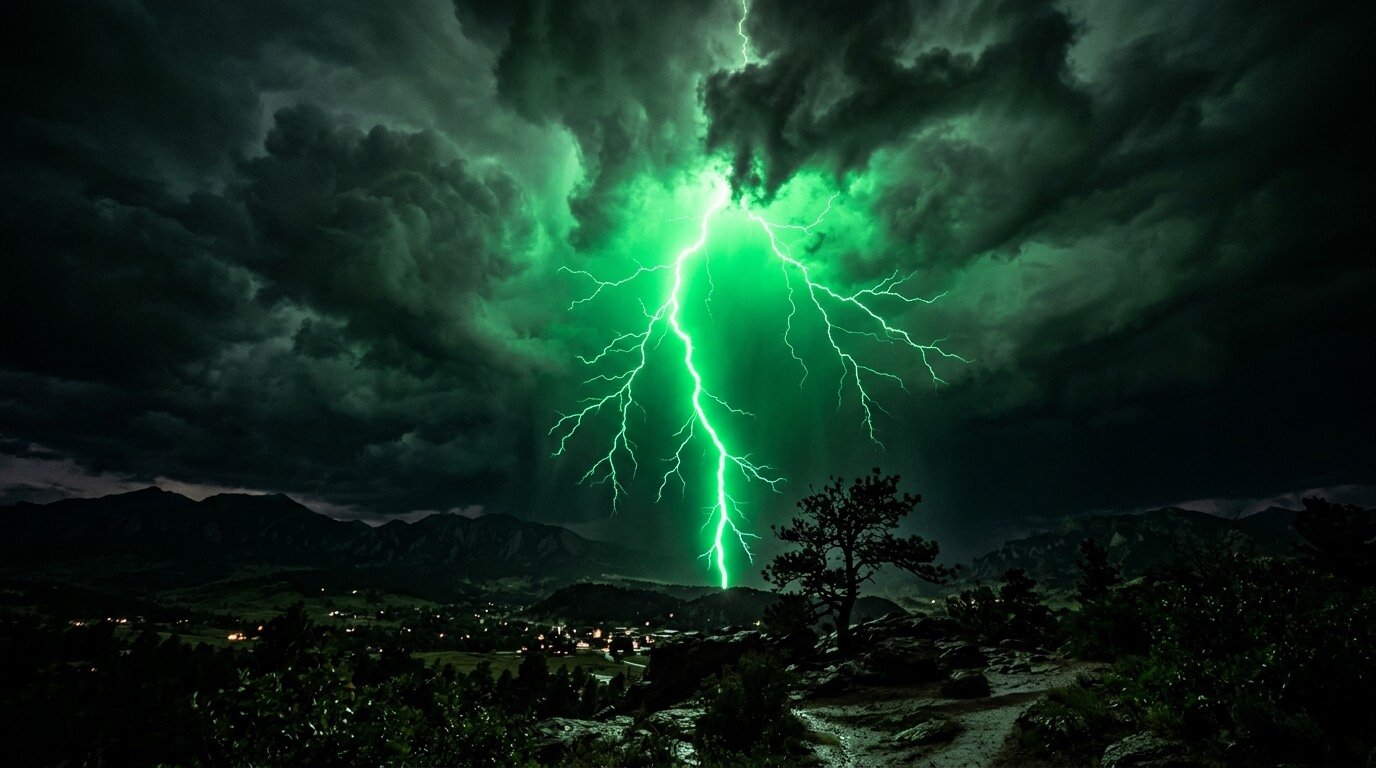
Green lightning refers to lightning that appears green to an observer. Unlike ordinary lightning, which usually looks white or bluish-white, green lightning is associated with unique atmospheric conditions, cloud composition, and light interactions.
Scientists believe that the green appearance may occur when lightning illuminates moisture-rich storm clouds containing large amounts of water droplets, hail, or ice crystals. In some cases, oxygen molecules excited by intense electrical energy may contribute to the green coloration.
Although rare, green lightning is considered a real atmospheric phenomenon rather than a myth.
How Does Lightning Normally Form?
To understand green lightning, it helps to know how ordinary lightning develops.
Lightning occurs when electrical charges build up inside storm clouds. Positive and negative charges separate within the cloud until the electrical imbalance becomes strong enough to overcome air resistance. The result is a sudden discharge of electricity known as lightning.
A lightning bolt can:
- Travel between clouds
- Strike the ground
- Move within the same cloud
- Travel from the ground to clouds
The extreme heat generated during a strike can reach temperatures hotter than the surface of the Sun.
What Causes Green Lightning?
Several scientific theories attempt to explain why lightning occasionally appears green.
1. Interaction with Oxygen
One explanation suggests that highly energized oxygen molecules emit green light when excited by powerful electrical discharges. Similar effects are observed in auroras where oxygen produces green emissions in Earth’s atmosphere.
2. Ice and Hail Inside Storm Clouds
Severe thunderstorms often contain large hailstones and dense ice particles. When lightning illuminates these particles, the reflected and scattered light may appear green to observers.
3. Atmospheric Light Scattering
Atmospheric scattering affects how humans perceive color. Moisture, dust, and cloud thickness can alter the visible color spectrum, occasionally producing green flashes during lightning events.
4. Green-Tinted Thunderstorm Clouds
Many reports of green lightning occur when storm clouds already have a green appearance. In such cases, the lightning itself may not be green; instead, it illuminates green-colored clouds, creating the illusion of green lightning.
15 Surprising Facts About Green Lightning
Fact 1: It Is Extremely Rare
Most lightning appears white or blue-white. Green-colored lightning represents only a tiny fraction of observed lightning events.
Fact 2: Scientists Continue to Study It
Although several explanations exist, researchers are still investigating the exact mechanisms behind unusual lightning colors.
Fact 3: It Is Often Associated With Severe Storms
Many sightings occur during intense thunderstorms containing hail and heavy rainfall.
Fact 4: Green Clouds and Green Lightning Are Not the Same
Green storm clouds result from light scattering and water content, while green lightning involves electrical discharges and visual effects.
Fact 5: Oxygen May Play a Role
Excited oxygen molecules can emit green light under certain energetic conditions.
Fact 6: It Can Be Mistaken for Electrical Power Flashes
Damaged transformers and power lines sometimes produce bright green flashes that resemble lightning.
Fact 7: Human Vision Influences Perception
The human eye interprets colors differently under low-light and storm conditions, which may affect how lightning colors appear.
Fact 8: It Has Inspired Myths for Centuries
Many cultures historically viewed unusual lightning colors as supernatural signs or omens.
Fact 9: It Is Different From Ball Lightning
Ball lightning appears as glowing spheres and remains one of the most mysterious atmospheric phenomena.
Fact 10: Cameras Sometimes Capture It Better Than Human Eyes
Modern photography can reveal subtle color variations that observers might miss.
Fact 11: Storm Intensity Matters
The strongest thunderstorms create conditions most favorable for unusual lightning colors.
Fact 12: Green Lightning Can Occur Within Clouds
Many electrical discharges happen inside clouds where they remain hidden from direct view.
Fact 13: It Is Sometimes Confused With Green Flash Phenomena
The atmospheric “green flash” seen during sunrise or sunset is unrelated to lightning.
Fact 14: Atmospheric Conditions Affect Visibility
Humidity, cloud thickness, and observer location influence whether green coloration becomes visible.
Fact 15: It Remains One of Nature’s Most Fascinating Mysteries
Despite advances in weather science, unusual lightning colors continue to intrigue researchers and sky watchers alike.
Is Green Lightning Dangerous?
The color of lightning does not make it more dangerous than ordinary lightning.
Any lightning strike can:
- Cause severe injuries
- Trigger cardiac arrest
- Start fires
- Damage buildings
- Disrupt electrical systems
Safety precautions should be followed regardless of the lightning color.
Green Lightning vs Green Flash
Many people confuse green lightning with the famous green flash phenomenon.
Green Lightning
- Occurs during thunderstorms
- Related to electrical activity
- Often appears within storm clouds
- Extremely rare
Green Flash
- Occurs during sunrise or sunset
- Caused by atmospheric refraction
- Lasts only a few seconds
- More commonly observed over oceans and clear horizons
These are completely different atmospheric events.
Can Green Lightning Predict Severe Weather?
Green lightning itself is not a weather forecasting tool.
However, green-colored storm clouds are frequently associated with:
- Large hail
- Heavy rainfall
- Severe thunderstorms
- Strong wind events
Meteorologists emphasize that green skies often indicate high water content within storm clouds rather than tornado formation directly.
Other Rare Types of Lightning
Nature produces many unusual electrical phenomena.
Ball Lightning
A glowing spherical object that appears during thunderstorms and remains poorly understood.
Red Sprites
Red-colored flashes that occur high above thunderstorms.
Blue Jets
Powerful upward discharges extending from thunderstorm tops into the upper atmosphere.
Gigantic Jets
Massive electrical discharges connecting thunderstorms to the ionosphere.
These events demonstrate how much remains to be discovered about atmospheric electricity.
Common Myths About Green Lightning
Myth 1: Green Lightning Always Means a Tornado
False. While severe storms may produce green skies, green lightning alone does not indicate a tornado.
Myth 2: It Is Supernatural
False. Scientific explanations involving atmospheric optics and electrical processes provide natural explanations.
Myth 3: Green Lightning Is Fake
False. Numerous observations and scientific discussions support its existence.
How to Safely Observe Lightning
If you enjoy storm watching:
- Stay indoors during thunderstorms.
- Avoid open fields and elevated areas.
- Stay away from metal objects.
- Do not shelter under isolated trees.
- Wait at least 30 minutes after the last thunder before going outside.
Lightning safety should always be your top priority.
Frequently Asked Questions
Is green lightning real?
Yes. Scientists and weather observers have documented rare instances of lightning appearing green under specific atmospheric conditions.
Why does lightning sometimes look green?
Possible reasons include oxygen excitation, light scattering, hail-filled clouds, and atmospheric optical effects.
Is green lightning common?
No. It is considered a rare weather phenomenon.
Can I photograph green lightning?
Yes. High-quality cameras often capture subtle lightning colors more effectively than the human eye.
Conclusion
Green lightning remains one of the most fascinating and mysterious atmospheric phenomena. While scientists generally agree that it can occur through a combination of electrical activity, oxygen excitation, cloud composition, and atmospheric light scattering, many details are still being explored. What makes it especially intriguing is its rarity and the fact that it often appears during some of nature’s most powerful storms.
Whether you are a weather enthusiast, photographer, or simply curious about unusual natural events, understanding the science behind green lightning helps separate fact from fiction. The next time a thunderstorm lights up the sky with an unusual green glow, you’ll know that you’re witnessing a rare and remarkable display of atmospheric science.